The 34th FilmFestival Cottbus offers exceptional cinema from Central and Eastern Europe in three exciting competitions from November 5-10.
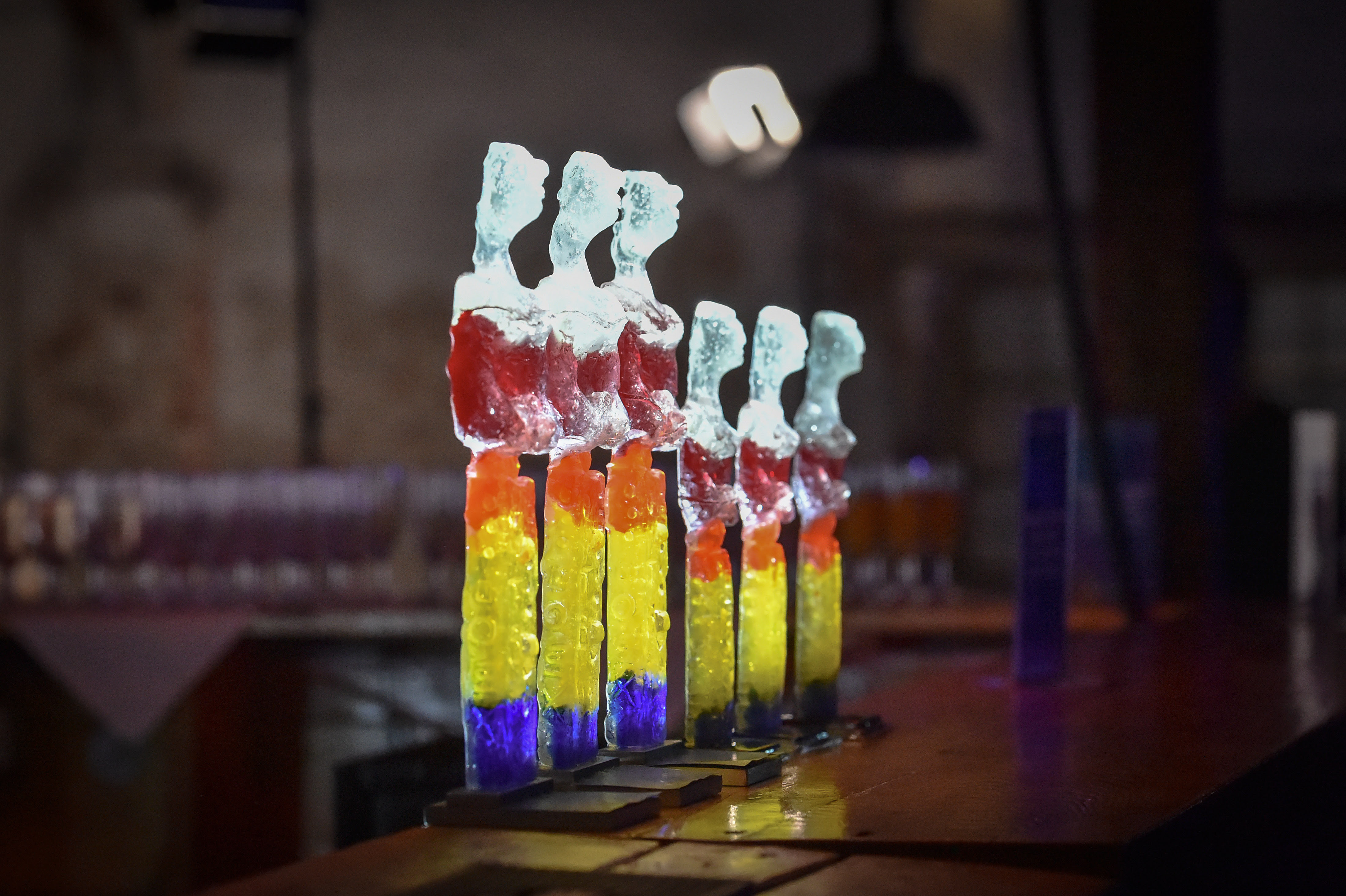
In the feature film competition, twelve titles from 19 (co-)production countries will compete for the prestigious Lubina prizes, including the main prize for the best film (EUR 15,000, donated by Medienboard Berlin-Brandenburg), the special prize for the best director (EUR 7,500, donated by Rundfunk Berlin-Brandenburg rbb) and the prize for an outstanding individual acting performance (EUR 5,000, donated by Sparkasse Spree-Neiße).
This year's competition once again showcases the stylistic and thematic breadth of Central and Eastern European cinema. Stories and experiences that reflect the challenges of life between family and society - between hope and grief, nature conservation and “turning point”, historical film and science fiction. Bittersweet screen adventures, realistic and touching, that leave nobody unmoved.
DWELLING AMONG THE GODS (RS/HR/IT 2024) by Vuk Ršumović is a modern-day Antigone drama about an Afghan family in Belgrade. The protagonist Fereshteh is faced with an almost impossible decision: should she continue her journey to the West, to a supposedly better future, or stay and give her brother, who died on the run, a proper burial? Magical suburban realism: in RIVIERA (GR/FR 2024), Orfeas Peretzis' debut, 17-year-old Alkistis faces a summer between loss and a new beginning. In UNDER THE VOLCANO (PL 2024) by Damian Kocur, a family from Kyiv struggles with the news of a war of aggression against their homeland during an involuntary vacation in Tenerife. The sci-film U ARE THE UNIVERSE (UA/BE 2024) by Pavlo Ostrikov tells of a destroyed Earth, togetherness in space and the last hope for a human encounter.
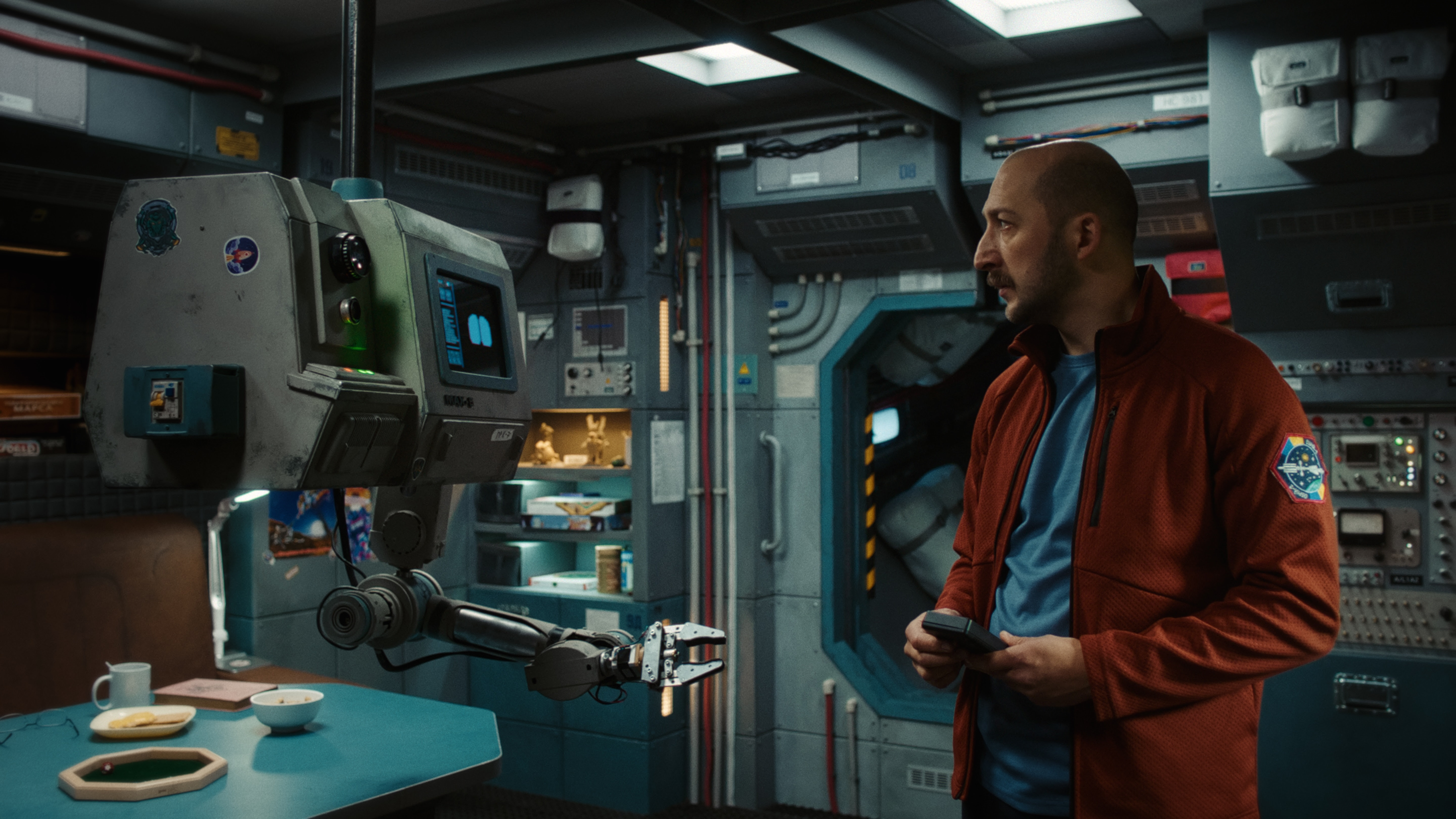
U R THE UNIVERSE
In BIKECHESS (Assel Aushakimova, KAZ/FR/NO 2024), a female journalist is confronted with the limits of freedom of expression and attacks on women's rights in an authoritarian state. In the gripping thriller DEAL AT THE BORDER (Dastan Zhapar Ryskeldi, KG 2024), two smugglers in the mountains of Central Asia help a young woman to escape slavery, putting her own life in danger. GOOD CHILDREN (Filip Peruzović, HR 2024 2024) portrays the difficult emotional journey of a brother and sister who, after the death of their mother, have to break up the family home and come to terms with their past and their estranged relationship. In OUR LOVELY PIG SLAUGHTER (CZ/SK 2024) by Adam Martinec, a rural family tradition becomes the starting point for a sensitive, ironic portrait of morality reminiscent of the films of the Czechoslovakian New Wave.
SOUTHERN CHRONICLES (Ignas Miškinis, LT/EE 2024) is a touching coming-of-age story about two young people from different social classes in the Lithuanian province of the 1990s who fall in love despite all their social differences. The world premiere THE TOWER OF STRENGTH (Nikola Vukčević, ME/RS/HR/DE 2024) is set during the Second World War. A Muslim-Albanian family hides a Christian child and becomes the target of an Albanian SS division - a gripping historical film about courage and humanity. In THE TRAP (Nadejda Koseva, BG/DE 2023), the fierce Yovo fights against environmental destruction in an idyllic river delta, while WHEN THE PHONE RANG (RS/US 2024) by Iva Radivojević takes a deeply moving look at the war years in the former Yugoslavia, when a young girl is confronted with the loss of her grandfather and her country.
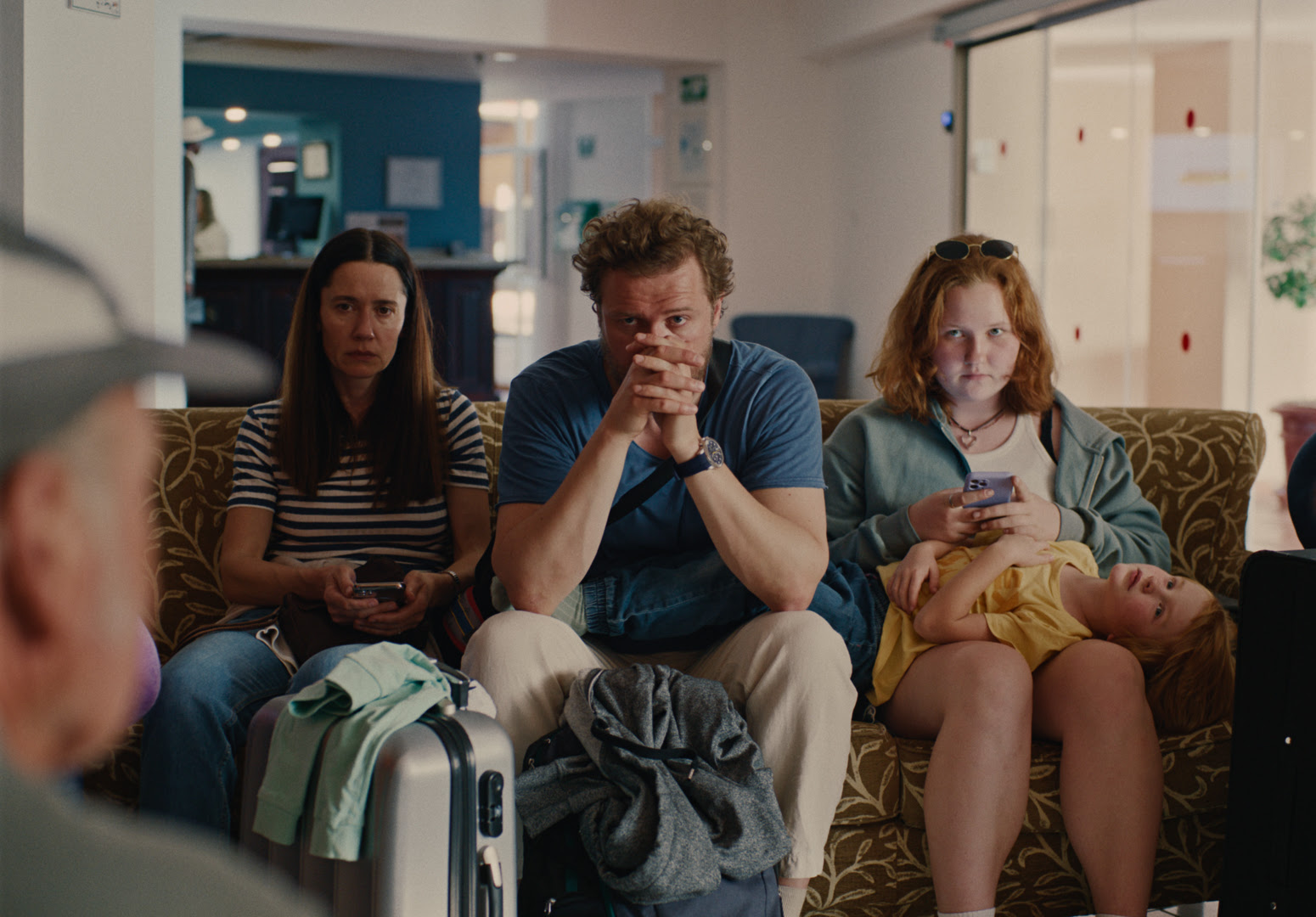
UNDER THE VOLCANO
The international festival jury decides on the award winners. This year's jury consists of Sonora Broka, artistic director of the Riga International Film Festival and editor, Cristina Groşan, Romanian-Hungarian filmmaker and director of the film ORDINARY FAILURES, which is screening in the Specials section, Anja Matković, Croatian theater and film actress and screenwriter, who is also the lead actress and screenwriter of the opening film MY LATE SUMMER, Inna Sahakyan, director and producer from Armenia, whose films AURORA'S SUNRISE and MEL are both screening in Close-Up: Armenia, and Xavier Henry-Rashid, French-British sales agent and former Executive Director of the Raindance Film Festival. Rashid is representing, among others, the food comedy TASTY from the Spectrum section, which is celebrating its world premiere at the festivals in Cork, Cottbus and Tallinn.
The short film competition brings a wide variety of films to the screen, from quirky humor to moving fates. AGE OF THE DRAGON (Marcell Farkas, HU/AT 2024) by Marcell Farkas takes us into a dystopian world full of fantasy, while CHRISTMAS DAY (EE 2022) by Alexandra Pärn tells a bizarre Christmas story. ALMOST CERTAINLY FALSE (TR/BG 2024) by Cansu Baydar sheds light on the life of a Syrian refugee in Istanbul. And @TIKTOK_COWBOY (RO 2024) by Anastaseu Ștefan is about a young Roma influencer during the lockdown. All short films in the program can be found here.
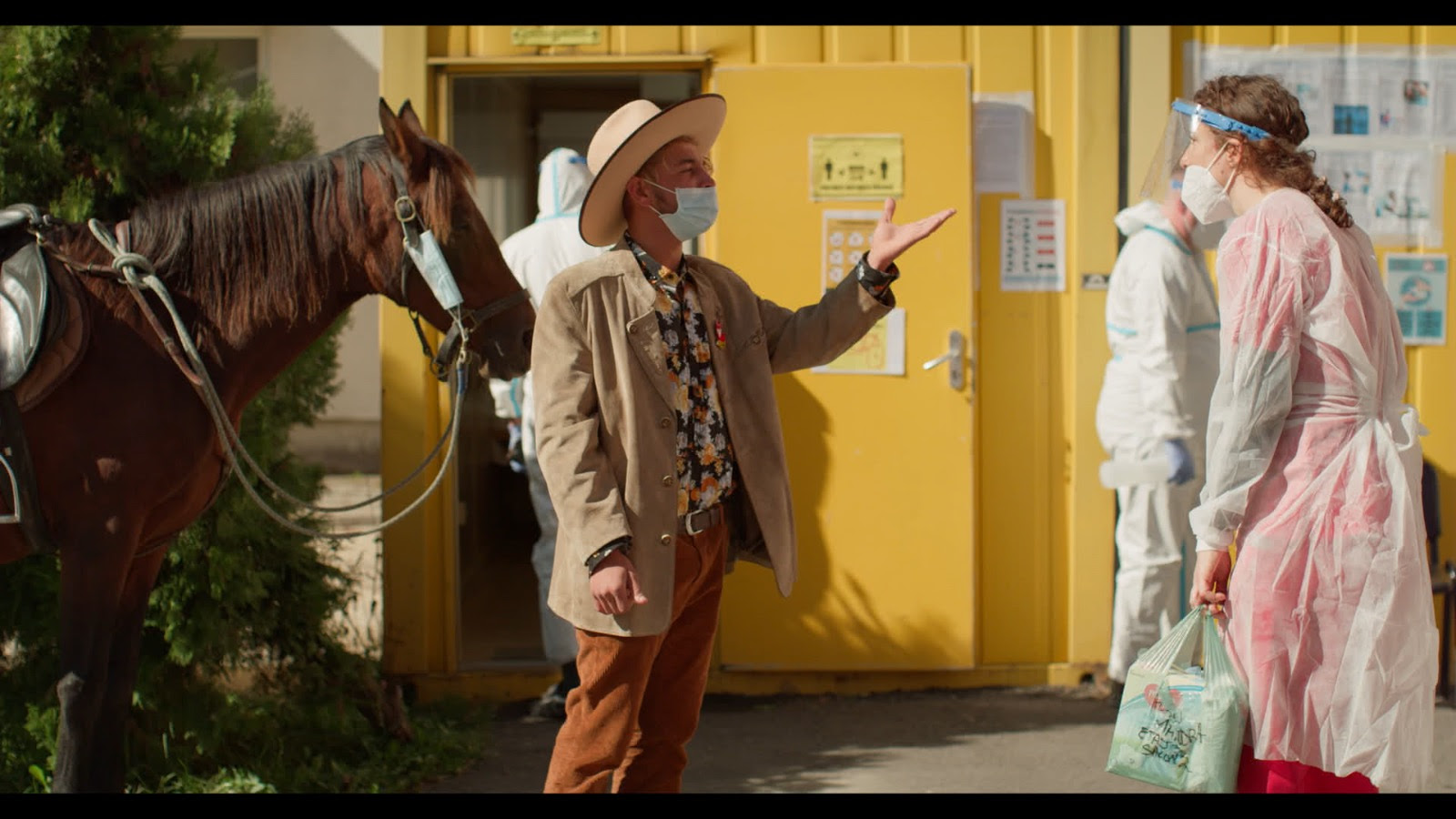
@TIKTOK_COWBOY
A main prize (EUR 2,500, donated by Druckzone Cottbus) and the special prize for the best director (EUR 1,500, donated by Tiede+) will be awarded. The winners will be selected by the short film jury, which consists of Szilárd Bernáth (Hungary), Eglė Vertelytė (Lithuania) and Magdelena Ilieva (Bulgaria).
The U18 competition for the best youth film (EUR 5,000, donated by the city of Cottbus) focuses on themes such as identity, freedom and rebellion against social expectations. DORMITORY (TR/DE 2023) by Nehir Tuna depicts the life of a 14-year-old searching for belonging and freedom in an Islamic boarding school, while GOTTESKINDER (DE, 2024) by Frauke Lodders shows the challenges of faith and falling in love for the first time in an evangelical family. TOXIC (LT 2024) by Saulė Bliuvaitė shows two teenage girls fighting for their place in a world characterized by toxic friendships in the midst of bullying and beauty mania. An EXPLANATION FOR EVERYTHING (HU/SK 2023) by Gábor Reisz tells the story of a high school graduate who triggers a national scandal with a small lie - a biting satire on social and political grievances. The U18 jury is made up of students from Teplice (CZ) and Cottbus. You can view the complete U18 section here.
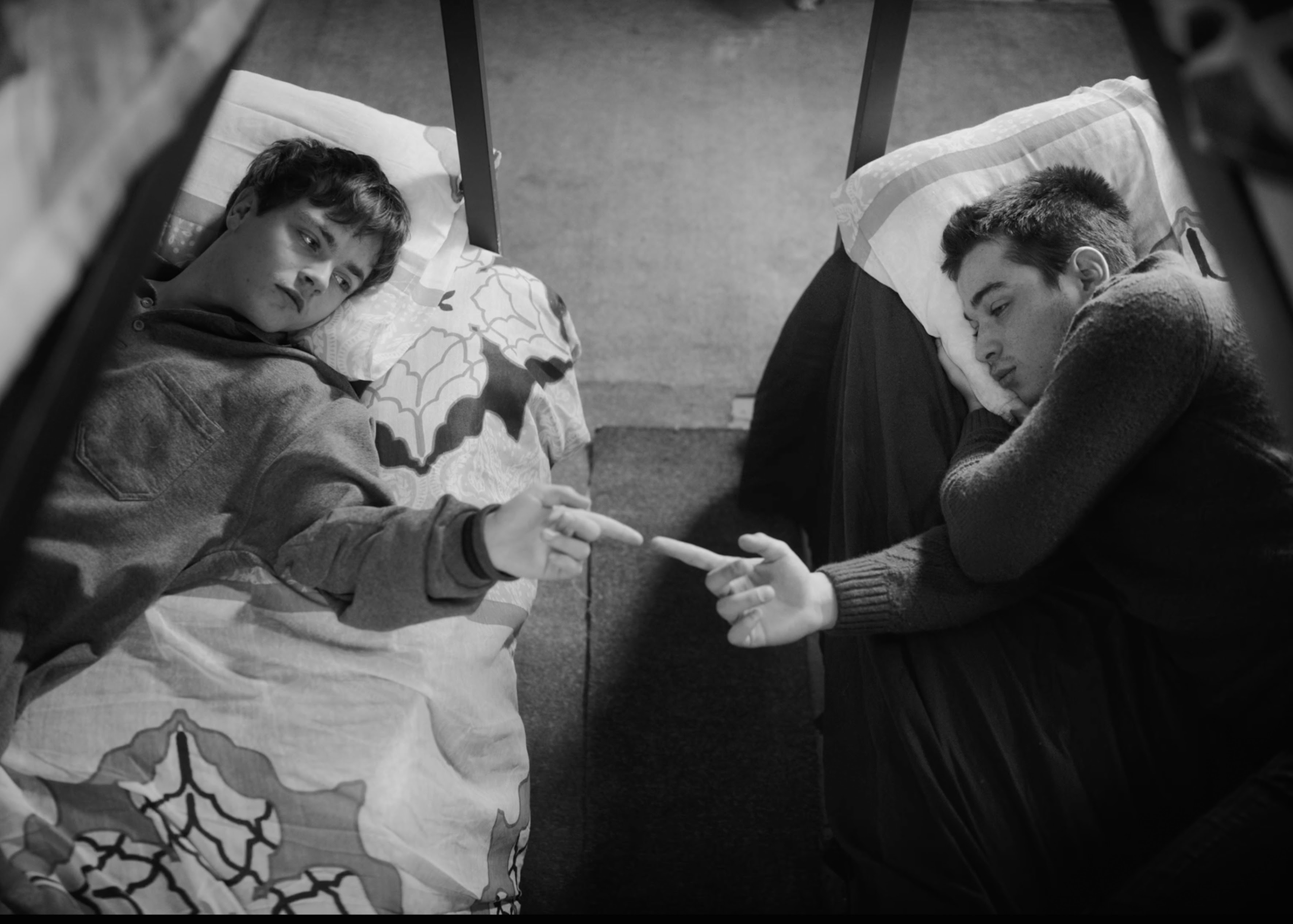
DORMITORY
The film lists and matching film stills for each film can be found in the PressLogin on our website. The login is available on request.
Accreditations for the festival week are possible online here and are free of charge for reporting press.
If you have any questions, please do not hesitate to contact us.
The FilmFestival Cottbus is supported by Medienboard Berlin-Brandenburg, the State of Brandenburg and the City of Cottbus. We are also very grateful for the support of Creative Europe Media, the Federal Government Commissioner for Culture and the Media, Sparkasse Spree-Neiße and the Federal Agency for Civic Education. Our media partners are radioeins, radio3 and the Lausitzer Rundschau.
The 34th FilmFestival Cottbus presents The Female Gaze: New Films from the Czech Republic
Festivals 30-10-2024A recently published, explosive study on the role of women in Czech cinema provides the occasion for the new film series “The Female Gaze: New Films from the Czech Republic” at the 34th FilmFestival Cottbus (November 5-10). The study “Women in the Audiovisual Industry: Feature Films” by the Film and TV School of Academy of Performing Arts in Prague (FAMU) shows that the presence of women in Czech cinema has changed only minimally since the 1990s. Despite the widespread impression of a growing proportion of women in the film industry, the research results prove that only the youngest generation of female filmmakers is initiating a noticeable change. Curated by Lenka Tyrpáková, the FFC presents the new diversity of Czech cinema in 12 current feature-length and short films.
HER BODY by Natálie Císařovská (CZ, SK, 2023, 107 min) shows the ambitious high diver Andrea, whose Olympic dream comes to an end after an injury and ultimately leads her into the porn industry. MY SUNNY MAAD (Michaela Pavlátová, CZ, FR, 2021, 79 min) tells the story of Helena, a Czech woman who follows her lover to Kabul and has to find her way in a new, strange world full of traditions and rules.

HER BODY
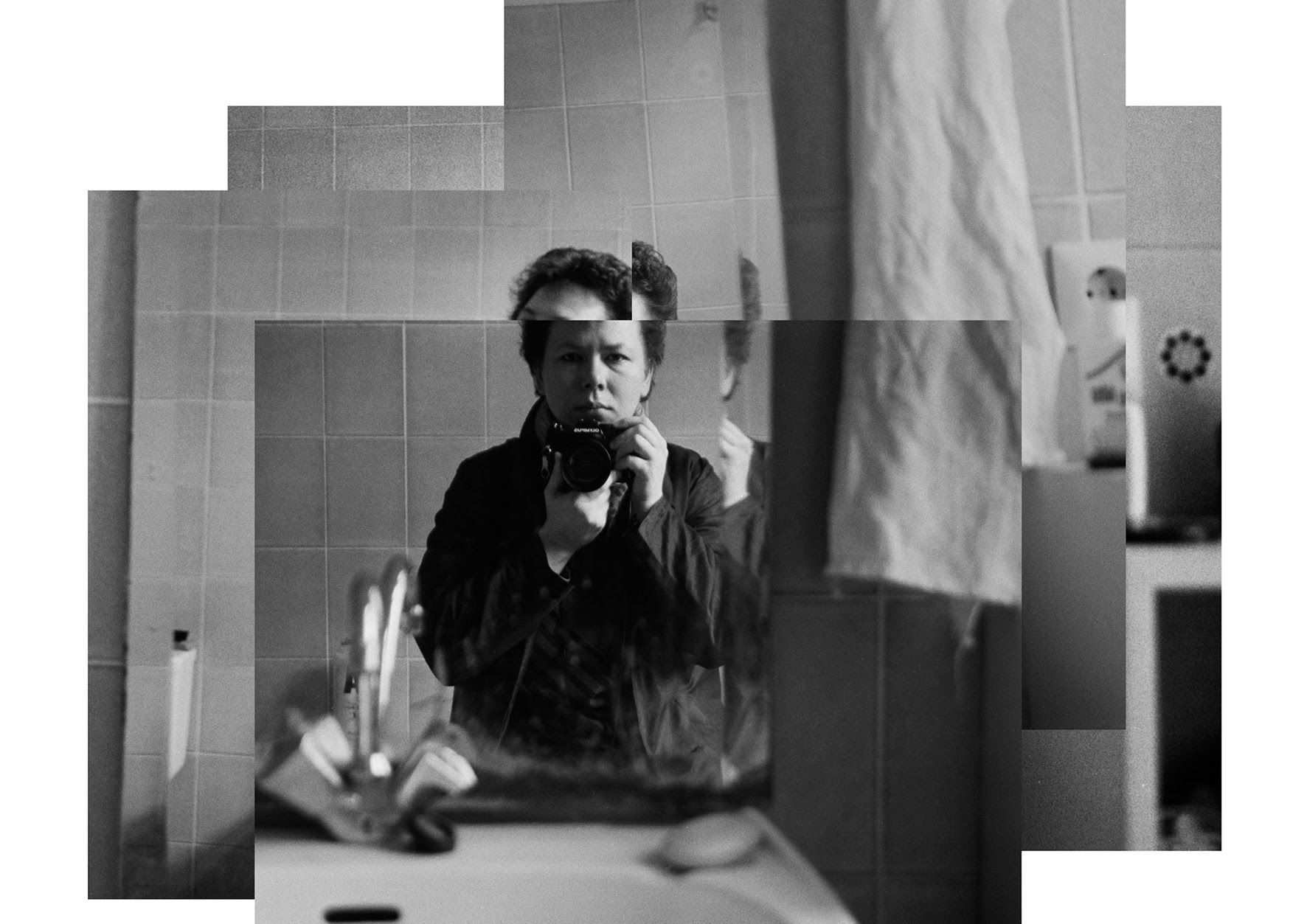
ORDINARY FAILURES (CZ, HU, IT, SK, 2022, 84 min) by International Festival Jury member Cristina Groșan follows three women in a mysteriously exploding city that confronts them with the question of what really matters in life. I AM NOT EVERYTHING I WANT TO BE by Klára Tasovská (CZ, SK, AT, 2024, 90 min) portrays the photographer Libuše Jarcovjáková, whose eventful life tells of her search for freedom in photographs and diary entries. Jarcovjáková also spent several years in Germany.
I AM NOT EVERYTHING I WANT TO BE
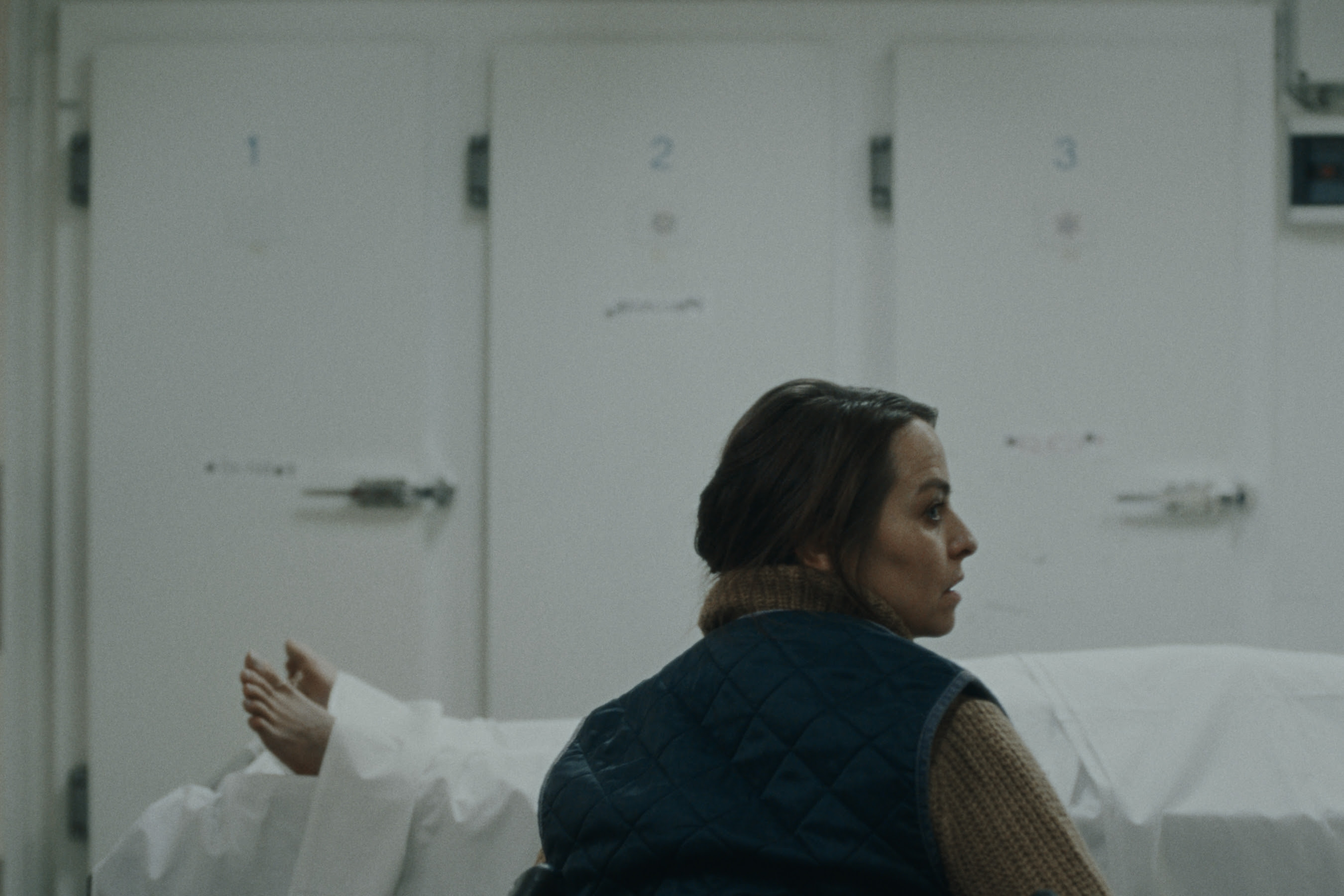
In TINY LIGHTS (Beata Parkanová, CZ, SK, 2024, 76 min), six-year-old Amálka experiences a major change during her summer vacation that tears her out of her childish fantasy world. YEAR OF THE WIDOW by Veronika Lišková (CZ, SK, HR, 2024, 109 min) follows the grieving widow Petra through the seasons and phases of her loss. In LIMITS OF EUROPE (Apolena Rychlíková, CZ, FR, SK, 2024, 98 min), journalist Saša Uhlová goes undercover to shed light on the harsh conditions for economic migrants in Europe and questions the costs of prosperity. There is also a great short film program.
YEAR OF THE WIDOW
The series will be complemented by the exciting “Panel on the study: The role of women in the Czech film industry” on Thursday, November 7, at 5 pm at the Glad-House, moderated by Lenka Tyrpáková (language: English). The filmmakers of the series will be joined by the authors of the study.
“The Female Gaze: New Films from the Czech Republic”, supported by the Czech-German Future Fund, invites audiences to experience outstanding and forward-looking female voices in Czech cinema and participate in a dialog about the importance of female perspectives in the European film industry.
The film stills for each film can be found in the PressLogin on our website. The login is available on request.
Accreditations for the festival week are possible online here and are free of charge for reporting press.
If you have any questions, please do not hesitate to contact us.
The FilmFestival Cottbus is supported by Medienboard Berlin-Brandenburg, the State of Brandenburg and the City of Cottbus. We are also very grateful for the support of Creative Europe Media, the Federal Government Commissioner for Culture and the Media, Sparkasse Spree-Neiße and the Federal Agency for Civic Education. Our media partners are radioeins, radio3 and the Lausitzer Rundschau.
Armenia captivates - through its location at the geographical crossroads of different cultures, its position between the Silk Road and Christianity, its centuries-old culture, its landscapes and traditions. And not least through its films. As part of the 34th FilmFestival Cottbus, the “Close-Up Armenia” section offers a diverse selection of current feature, animated and documentary films: from a moving melodrama from Stalinism to an intimate portrait of a transgender athlete. The film series explores the deep psychological scars left by the country's history of genocide and the wars over Nagorno-Karabakh, and sheds light on the tensions between individuality and tradition in Armenian society.
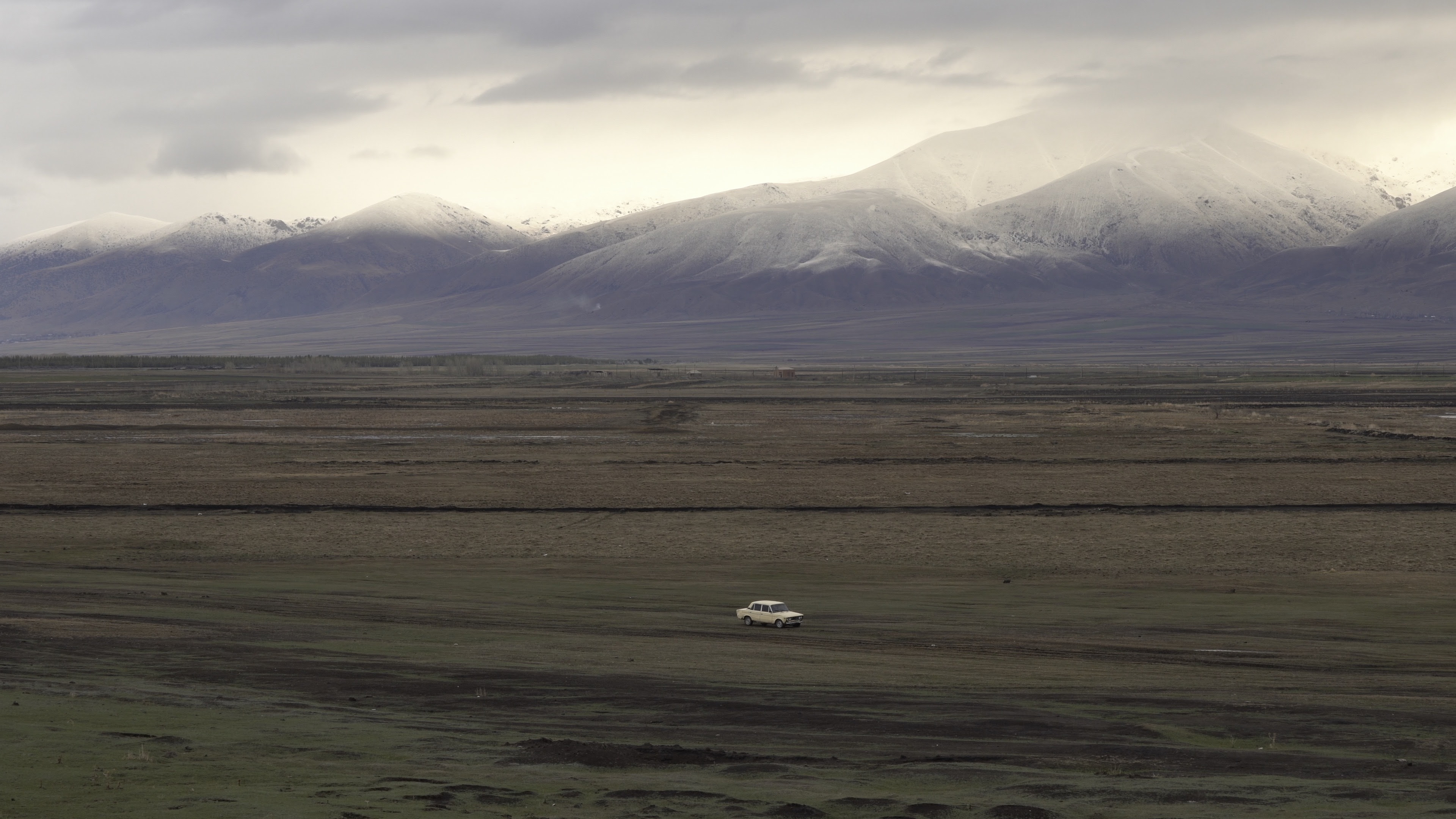
LANDSHAFT
A highlight of the section is the MasterTalk “Armenian Cinema between Past and Present” with the member of the International Festival Jury and director of the films MEL and AURORA'S SUNRISE, Inna Sahakyan, on November 6 at 3 pm in the Kammerbühne. Moderated by Bernd Buder, the talk offers participants the opportunity to delve deeper into the cultural and historical themes of Armenian cinema and explore developments in the Armenian film scene.
The film series shows the following current productions: AMERIKATSI (Michael A. Goorjian, AM, 2022), a political tragicomedy full of longing and melancholy, in which a man unexpectedly ends up in prison after his return to the Soviet Union; AURORA'S SUNRISE (Inna Sahakyan, DE/AM, 2022), an impressive animated film about the survival story of a young woman who survived the Armenian genocide and eventually fled to the USA; The Backstage (Hovhannes Galstyan, AM, DE, LU, 2024), a dark drama about intrigue and power struggles in the state-sponsored ballet of Yerevan; LANDSHAFT (Daniel Kötter, DE/AM, 2023), a contemplative journey through the barren, war-torn landscape of eastern Armenia; FAR FROM MICHIGAN (Silva Khnkanosian, FR, AM, 2023), a poetic documentary about the almost deserted town of Stepanakert in the current conflict in Nagorno-Karabakh; MEL (Inna Sahakyan, Paul Cohen, AM, NL, 2023), the story of a former weightlifter who faces hostility as a transgender woman in Armenia and starts a new life in the Netherlands; FIGHT (Lilit Movsisyan, AM, FR, 2024), a sensitive portrait of a young woman in Armenia who fights against societal expectations to pursue her dream; LUMEN NATURAE (Arthur Sukiasyan, AM, 2024, 20 min), a touching coming-of-age story about grief, pain and loneliness in the war for Nagorno-Karabakh; and THE WAR DIARY (Hakob Melkonyan, FR, AM, 2024), a moving search for clues that transposes the filmmaker's grandfather's war diary into the present day and sheds light on the current reality of war.
With these impressive films and the MasterTalk, the FilmFestival Cottbus, supported by the Federal Agency for Civic Education, offers a platform that brings the past and present of Armenia to life in the mirror of its cinema.
The film stills for each film can be found in the press login on our website. The login is available on request.
Accreditations for the festival week are possible online here and are free of charge for reporting press.
If you have any questions, please do not hesitate to contact us.
The FilmFestival Cottbus is supported by Medienboard Berlin-Brandenburg, the State of Brandenburg and the City of Cottbus.
Introducing the Competition Jury
One year before the 25th anniversary of goEast – Festival of Central and Eastern European Film, the festival team is delighted to introduce the members of the international Competition Jury. The chairwoman of this year's international goEast Competiton Jury is Italian producer and programming consultant Nicoletta Romeo, artistic director of Trieste Film Festival. Joining her is Romanian actress Ilinca Manolache, who is currently making waves with her stellar performance in the lead role of Radu Jude's most recent outing DON’T EXPECT TOO MUCH FROM THE END OF THE WORLD. The line-up continues with multi-award-winning Czech film producer Jiří Konečný, founder and proprietor of Endorfilm (Prague), who has had nine films selected as national Oscar candidates to date. Director, curator, activist and performer Hamze Bytyçi, a native of Kosovo, will also be serving on the jury; Bytyçi is also the founder and artistic director of the Berlin-based Romani organisation RomaTrial e.V. and the international Romani film festival "AKE DIKHEA?". Finally, Warsaw-born Hamela Maciek rounds out this year's jury line-up – Maciek is a journalist, producer and filmmaker who has enjoyed a long-term collaboration with the BBC Channel, among other career highlights. Out of competition his documentary IN THE REARVIEW will be screened during goEast this year,
The international film critics' organisation FIPRESCI will be represented at the festival by a three-member jury. Bulgarian film critic and journalist Bojidar Manov has accompanied the evolution of goEast since its very first edition in 2001. He is a member of the European Film Academy as well as an author and translator. Katrin Hillgruber works as a freelance journalist and film and literary critic for diverse newspapers, radio broadcasters and the online film magazine "artechock". Last but not least, Romanian film critic Catalin Olaru serves as artistic director for multiple festivals.
The East-West Talent Lab Jury also features three esteemed members this year. First up is multiple-award-winning Dutch documentary filmmaker Jessica Gorter, whose work often deals with the life and history of the former Soviet Union. Apart from her jury work, Jessica will screen the German premiere of her latest documentary THE DMITRIEV AFFAIR in Germany Joining her is Dagmar Mielke, who has worked as an editor for RBB/ARTE since 2004, following employment with various other editing departments and activities as an author and director. Finally, Maciej Nowicki is chairman of the board of directors of the Helsinki Foundation for Human Rights in Poland, one of the largest human rights organisations in Central and Eastern Europe. A trained lawyer, Nowicki is also an expert in human rights, the rule of law and documentary film, and the director of the WATCH DOCS film festival in Warsaw.
The RheinMain Short Film Award Jury
This year's jury also features three members from diverse backgrounds. Garegin Vanisian, born in the USSR, is a lawyer, as well as an author, film programmer, journalist and co-founder of the cultural non-profit "Filmkollektiv Frankfurt – Projektionsraum für unterrepräsentierte Filmkultur e.V.", which has been active since 2013. Saul Judd is a freelance curator and programmer – he has also been responsible for the video art selection at "LICHTER Filmfest Frankfurt International" since 2010. Philipp Aubel has been a member of the QUEER Filmfest Weiterstadt team for ten years, where he is in charge of curating the program, on a volunteer basis. He is primarily employed as a project director responsible for the working area "Young Film Scene" within the BJF (The German Federation of Film Clubs for Children and Young People), where he maintains the informational network and is currently preparing the 59th edition of the "Werkstatt der Jungen Filmszene".
goEast Press Breakfast
Festival director Heleen Gerritsen presented the program of goEast – Festival of Central and Eastern European Film today (Wednesday, 17 April) in the scope of a breakfast get-together with members of the press at Wiesbaden's Caligari FilmBühne. It is particularly pleasing that the representatives of the funding organisations present announced their comprehensive support for future festival editions, including the 25th edition next year. goEast is showing 91 films from 40 countries from Wednesday, 24 April, to Tuesday, 30 April.
Festival attendees can look forward to twelve German premieres, one international premiere and a world premiere. The diverse sections, numerous lectures and film talks, as well as the third edition of the accompanying program, a veritable journey of cinematic discovery entitled "Cinema Archipelago", all promise engaging experiences.
"I am delighted that we will soon be opening goEast for the 24th time," said Ellen M. Harrington, director of DFF - Deutsches Filminstitut & Filmmuseum, which has been hosting goEast for 24 years. Harrington extended a warm thank you to all of the festival's sponsors for their many years of extensive support. "I hope the festival's many compelling films and thought-provoking discussions help to reduce the distance between the different parts of Europe and facilitate many interesting encounters."
In the goEast Competition section, current film productions will by vying for a chance to take home the festival's three main prizes, awarded by an international jury: the "Golden Lily" for Best Film (endowed with 10,000 euros); the Award of the City of Wiesbaden for Best Director (7,500 euros); and the CEEOL Award for Best Documentary Film (endowed with 4,000 euros in prize money). In addition, a dedicated jury representing the International Federation of Film Critics (FIPRESCI) will be awarding two prizes of its own.
Heleen Gerritsen, who has served as goEast's director since 2017, explained: "In 2024, we're starting once again with a very strong Competition section that's full of variety, in which the productions – whether we're talking about documentary or fiction films – reflect both the reality and absurdity of everyday life in Central and Eastern Europe. The filmmakers here employ a very wide range of cinematic languages and approaches in their works, from satire to hyperrealism. However, one thing remains valid throughout: the personal is political. In films such as 1489, MADINA, KIX, BAURYNA SALU, A PICTURE TO REMEMBER, OXYGEN STATION and many other entries to the Competition, personal stories are linked to a wider context."
More than 200 guests from the Central and Eastern European film branch are expected to attend the festival in Wiesbaden.
The other festival sections include this year's Symposium, which bears the title "The 'Other' Queers – Cinematic Images from the Periphery of Europe". Curators Jasmina Sepetavc and Yulia Serdyukova have made it their mission to bring forgotten, libidinous, creative and marginalised queer film images into the spotlight and to make queer cinema from Central and Eastern Europe accessible for a broader audience.
In the Program NEW VOICES FROM CENTRAL ASIA, goEast, in co-operation with the ZDF/ARTE short film series "Kurzschluss", is screening a finely curated program of short fiction and documentary films from a vibrant region. The proudly maladapted ANARCHO SHORTS are back with a selection of headstrong short films showcasing an anarchic spirit, chosen collaboratively by the goEast team.
In the special FOCUS: Kosovo & Albania section, realised in co-operation with the Albanian National Center of Cinematography and the Kosovo Cinematography Center and featuring the participation of diverse special guests, goEast is presenting an excursion into the film histories of both countries. The new HUMAN RIGHTS SUNDAY is taking place in co-operation with Poland's WATCH DOCS International Human Rights Film Festival and represents the fulfilment of a desire to create a dedicated outlet treating human rights and democratisation in cinema.
Under the slogan RHINE, WINE & RHYMEZ, a riverboat outing on the Rhine invites attendees to listen as film guests recite their favourite poems in diverse Central and Eastern European languages, accompanied by live translation into English. Come join the festival crew for an elegant literary cruise past Biebrich Palace and the half-timbered houses, vineyards and castles of the Rheingau.
This year's archive presentation, realised in co-operation with ArteKino Classics, is devoted to Hungary. MERRY-GO-ROUND (HUN, 1955), directed by Zoltán Fábris, is the featured film presentation at the Matinee on Sunday, 28 April, at Caligari FilmBühne. Moreover: The Yugoretten are back! The Balkan artists network with the ironic moniker returns for a second edition, under the direction of curatorial triumvirate Borjana Gaković, Mateja Meded and Boris Hadžija, with a host of performances, film screenings, networking events and discussions revolving around ex-Yugoslavian family histories and stories.
This year's thematic focal points include women and queer culture, migration and the country of Kosovo in the context of former Yugoslavia. This year's IN MEMORIAM spotlight honours filmmaker OTAR IOSSELIANI and goEast's first artistic director, SVETLANA SIKORA. Together with the European film education project CinEd, of which DFF is a partner, goEast is providing children and adolescents with an opportunity to get better acquainted with films from Central and Eastern Europe in the scope of the program KIDS GOEAST – CINED IN WIESBADEN UND FRANKFURT AM MAIN.
Anna Schoeppe, managing director of HessenFilm & Medien, is greatly looking forward to goEast, as she shared: "For their 24th festival edition, the goEast team has once again curated a diverse film program. goEast offers its audience the opportunity to experience highlights of contemporary Central and Eastern European cinema and occupies a very special place in Hessen's film festival scene with this unique focus. goEast also manages to create lots of space for cultural dialogue and professional exchange among filmmakers from a range of countries, which further bolsters the festival's image. I'm looking forward to experiencing another exciting festival edition!"
For Wiesbaden city councilwoman Patricia Becher, goEast Film Festival is particularly relevant in the present moment. In her words: "The state capital of Wiesbaden is closely connected to our Eastern European neighbours, in a variety of ways, and many of the traces of our city's history point to the East. Through cinema, goEast opens nuanced perspectives of a multi-faceted region to us and encourages mutual exchange with numerous international filmmakers and cinema lovers. It is a great joy to have this festival take place in the state capital."
Karin Wolff, managing director of Kulturfonds Frankfurt RheinMain, which is sponsoring the innovative "Cinema Archipelago" program for the third year in a row, observes: "This year's goEast will once again be an emotional and rich festival – also in the section that Kulturfonds Frankfurt RheinMain is delighted to support once again: We are looking forward to a lively encounter between Kosovo and Albania – from the still conflict-ridden former Yugoslavia – in Wiesbaden, and to formats like the Competition section, the Symposium and the riverboat cruise through wine country, with their respective focal points."
Finally, goEast wouldn't be goEast without parties. On Friday, 26 April, the SCHLACHTHOF SOLI PARTY FOR UKRAINE will take place at Kulturzentrum Schlachthof under the motto "Faїno", which means "fine" or "beautiful" in Ukraine and promises to acquaint party-goers with the greatest musical treasures from the last 32 years of (still ongoing) Ukrainian independence. All proceeds from the party will be donated to humanitarian aid organisations. At the GOEAST PARTY@MUSEUM WIESBADEN on Saturday, 27 April, Wiesbaden club legend DJ Janeck is inviting film guests and festivalgoers to the Festival Centre to dance the night away to international disco beats from the 1970s and '80s.
The full program is now available on the festival website. The 24th edition of goEast – Festival of Central and Eastern European Film will kick off at 7 pm on Wednesday, 24 April, followed by a screening of this year's opening film, CROSSING (SWE/DNK/FRA/TUR/GEO, 2024) by Georgian director Levan Akin, at Wiesbaden's Caligari FilmBühne.
Accreditation
Members of the press can apply here for accreditation for goEast – Festival of Central and Eastern European Film. Accreditation grants admission to the film screenings in Wiesbaden, Darmstadt and Gießen. In addition, during the festival period accredited industry guests and members of the press receive access to an online media library featuring an extensive selection of festival programming.
For the 23rd time, goEast - Festival of Central and Eastern European Film is bringing a multi-faceted program featuring film screenings and accompanying events to Wiesbaden and the Rhine-Main region. The festival, organised by DFF – Deutsches Filminstitut & Filmmuseum, sees itself as a window to Central and Eastern Europe and a continual builder of intercultural bridges to the East. Traditionally, goEast has always been deeply involved with the contemporary political and cultural situation in the region.
The Russian war of aggression against Ukraine represents a historical rupture and presents this film festival specialised in Central and Eastern European subject matter with great challenges. The goEast team's solidarity continues to be with the people of Ukraine: "Our thoughts are constantly with our colleagues, friends and relatives affected by Russian aggression," as Heleen Gerritsen, director of the festival, states, adding: "At the same time, the situation has motivated us more than ever to present the film cultures of our target region, which are underrepresented in German cinemas, in all their diversity and uniqueness."
From 26 April to 2 May 2023, goEast extends an invitation to come to Wiesbaden and get to know Central and Eastern European cinema in the scope of film screenings, film talks and encounters with film makers.
Symposium: Decolonizing the (Post-)Soviet Screen
In the Symposium, goEast traditionally takes a closer look at topics, regions and currents within Central and Eastern European cinema. In 2023, the program will take place as part of the Cinema Archipelago series, made possible with the generous support of Kulturfonds Frankfurt RheinMain.
Since its inception in 2001, goEast Film Festival's central missions have included the platforming and amplification of new, previously marginalised cinematic languages and voices from Central and Eastern Europe beyond dominant mainstream narratives. As such, this year's focus on (post-)Soviet cinema, as seen through the "decolonising lens", is not entirely novel for the festival. Nevertheless, like many other cultural institutions dealing with the Central and Eastern European space, the goEast team is aware that the festival has traditionally granted Russia a dominant position in the festival program more than other countries within the target region. Shifting and re-distributing attention have become a vital curatorial responsibility.
The term decolonisation is often met with scepticism in the Eastern European context – where it has been dismissed as a fashionable Western buzzword that goes hand in hand with "wokeness" and "cancel culture". Here it is important to note that the specific form of Soviet/Russian colonialism which the Symposium will be treating differs significantly from that of other European colonial powers – not least of which when it comes to cinema: with the establishment of film studios and infrastructures in its republics, Soviet cultural policy also facilitated the local empowerment of the "other nationalities", albeit centrally organised and conducted in the Russian language as lingua franca.
Nevertheless, the "decolonising lens" is a useful tool for the analysis of a region in turmoil, and the festival team recalls how the term "feminism" used in an Eastern European context initially met with resistance and incomprehension at the 2017 goEast Symposium "Reluctant Feminism", before soon experiencing greater acceptance.
Submissions to Symposium Open until 1 March
With the support of luminaries from the worlds of film scholarship and filmmaking, such as Prof. Nancy Condee, Ivan Kozlenko, Dita Rietuma, Daria Badior, Igor Soukmanov, Oleksiy Radinsky, Valentyn Vasyanovych and Davra Collective, curators Barbara Wurm and Heleen Gerritsen will take the historical rupture represented by Russia's war of aggression against Ukraine as a departure point to reflect on several key aspects of the institutional and political entanglement of the non-Russian film cultures – above all the Ukrainian – with the one-time power centre of Moscow. Discussion will cover a wide range of topics: Ukrainian cinema of the past and future; the traces of the imperial in "non-Russian Russia", for instance in Sakha or the North Caucasus region; the film festival landscape beyond Moscow – from Minsk to Tashkent (historically and today); the cinematic and film-cultural legacy of the USSR – from Kyiv and Riga to Tbilisi and Yerevan back to Wiesbaden, as well as the debate on the appropriate approach to canons and classics; the question of Soviet anti-colonialism; the question of who owns the rights and copies of Soviet films produced by non-Russians; the cultural and national memory of alternative, non-state film and photo archives; and documentary cinema as a space for reflection on what the notions of Soviet and post-Soviet once signified and can signify today.
Within the Symposium, these topics will be explored from film-historical, political and sociological angles, featuring special guest presenters from the fields of film scholarship and filmmaking practice. To accompany the Symposium of the 23rd edition of goEast, a special issue of Apparatus. Film, Media and Digital Cultures of Central and Eastern Europe is to be compiled and published, under the title "Decolonizing the (post-)Soviet Screen". Contributions that aim to apply the decolonisation concept in the context of the (post-)Soviet space (including Central Asia, Ukraine, Belarus, the Baltic states, the Caucasus, Russia and its autonomous regions) can be submitted from now until 1 March.
goEast Co-operation with the Berlinale's European Film Market
The topic of the Symposium has already been met with a very positive response during preparations for the event and has also been taken up by the Berlinale's European Film Market. On 20 February 2023, a panel discussion organised in co-operation with goEast will take place, under the title "A New Reality: Decolonising the Post-Soviet Screen", in which goEast festival director Heleen Gerritsen will engage in conversation with film industry representatives from Georgia, Latvia, Tadzhikistan and Ukraine, as well as Simone Baumann from German Films. The talk will explore how the most recent realities of the post-Soviet space are conveyed and depicted on screen while delving into their aesthetic, film-historical, political and sociological significance for the film industry and the audience in an international context.
Event location:
Dokumentationszentrum für Flucht, Vertreibung, Versöhnung
Stresemannstraße 90,
10963 Berlin
20.Februar 2023, 15:15 Uhr
Admission free of charge with EFM Market Badge
Emerging Beyond Borders: East-West Talent Lab
Once again, this year goEast will be supporting filmmakers and emerging talents from Central and Eastern Europe and providing them with an opportunity to network with like-minded peers from Germany. Under the continued direction of Andrea Wink, the program will once again focus on documentary formats. Filmmakers from Central and Eastern Europe can submit their project ideas currently in development until 28 February 2023. Producers hailing from Central and Eastern Europe as well as Germany without a concrete project can also apply to attend the East-West Talent Lab.
Cinema Archipelago - The East as an Island?
For the second time already, goEast – Festival of Central and Eastern European Film is presenting the interdisciplinary sidebar programme Cinema Archipelago, made possible with the generous support of Kulturfonds Frankfurt RheinMain. With this special festival programme, the festival once again has the possibility to shine a spotlight on new medial forms of expression in Central and Eastern Europe. In the wake of Russia's war of aggression against Ukraine, an acute desire for decolonization has arisen in the cultural scene and film sector in the post-Soviet space. The Symposium "Decolonizing the (Post-)Soviet Screen" brings research, scholarship, film heritage and cinematic practice together under the direction of Barbara Wurm and Heleen Gerritsen. The film selection features works from former Soviet states, but also films by filmmakers from indigenous or hitherto marginalised groups that are attempting to redefine their identities and relationship to dominant Russian culture.
RheinMain Short Film Award – Native Edition
Already celebrating its fourth edition, goEast is delighted to once again present the RheinMain Short Film Award this year, featuring 2,500 euros in prize money. A three-member regional jury will select the winning film. This year features a new thematic twist: the short films of the selection were all made by indigenous filmmakers or those representing marginalised groups. The Russian Federation is home to 185 ethnic minority groups. The Central Asian republics are also very ethnically diverse – and the official national borders artificial and arbitrary. The short films in this year's competition come from the autonomous republics of Kalmykia (EXULTATION, 2022, Arslan Manasyan), Sakha (AITAL, 2021, Vladimir Munkuev) and Chechnya (NO NATION WITHOUT CULTURE, 2022, Vladlena Sandu), as well as from Uzbekistan (TALE, 2022, Kamila Rustambekova and ARALKUM, 2022, Daniel Asadi Faezi and Mila Zhluktenko) and Kirgizstan (NEITHER ON THE MOUNTAIN NOR IN THE FIELD, 2022, Gulzat Egemerdieva). Ukrainian director Sashko Protyakh also appears here with KHAYT (2021), a futuristic short film, in which he fantasises about a future shaped by Asov-Greek culture for the (in the meantime completely destroyed) port city of Mariupol. The filmmakers will be in attendance in Wiesbaden. Following the festival, the short films will head out on tour, visiting cinemas throughout the Rhein-Main region.
Tales from the Bathhouse
The traditional bathhouse culture found in Wiesbaden is also a cherished part of Eastern European cultures. Following the successful experiment last year, the festival is returning to the VRChat bathhouse with this year's virtual reality programme. In 2023, goEast and guest curator Georgy Molodtsov are offering three groups of Central and Eastern European artists the possibility to breathe new life into their stand-alone VR works by transforming them into multiplayer online environments. Through this collaboration, goEast is able to provide greater visibility for these works and enable the artistic VR world to emerge from beneath the shadow of an industry dominated by pure entertainment products.
goEast's bespoke bathhouse invites members of the public to slip into their finest avatar bathing outfits and immerse themselves in the artistically designed world, or to explore the designers' creative works at the new festival location Altes Gericht in Wiesbaden. Admission to "Tales from the Bathhouse" is open to the general public at no charge.
TikTok 2023
What is on the mind of Generation Z in 2023? Questions of identity, racism, Russia's war of aggression – young TikTokers speak their truth or slip into the skin of an alter ego for little sketches, like the "ungrateful Ukrainian refugee" or the "Balkan dad". Once again, goEast has collected TikTok videos from our focus region as well as from young Eastern Europeans in exile, in order to present the festival audience a big-screen collage consisting of existential angst, absurd dance videos, uncomfortable opinions and bad puns.
"Space Age Animation" from Hungary and Estonia + Estonian Funk Embassy
Estonia and Hungary have more then their Finno-Ugric languages in common: they are both also home to unique animated film cultures. In Tallinn and Budapest of the 1970s and '80s, the marginal position of animated film enabled artists to operate outside of mainstream film culture and to create subversive and experimental works that frequently managed to evade the censors. These films from Estonia and Hungary are characterised by topics such as the conquest of outer space, sociocultural critique, the era of stagnation with its bourgeois tendencies, escapism, the dangers of technocracy and the creative desire to experiment. Now, a new short film programme at goEast brings together a selection of these works, such as AATOMIK & JÕMMID (1970) by Elbert Tuganov, founder of the Estonian film studio Nukufilm, THE FLIGHT (1973) and COLOUR-BIRD (1974) by Rein Raamat, founder of Joonisfilm. A further block consisting of two Pannonia short film programmes offers the festival audience an opportunity to appreciate the films of Pannonia studio founder Gyula Macskássy and his daughter Kati on the big screen. Kati Macskássy's art is particularly affecting for its animation of children's drawings and letters, which she used to indirectly expose the official propaganda of the era. Sándor Reisenbüchler's psychedelic and socially critical collages, such as PANIC (1983) and THE YEAR OF 1812 (1972), and two feature-length films, SON OF THE WHITE MARE (1981) by Marcell Jankovics and BUBBLEBATH (1979) by György Kovásznai, also occupy well-deserved spots in this programme. In the “Space Age Animation” section, festival attendees can enjoy a total of 20 classic animated films on the big screen.
Those who can't get enough of the groovy animation soundtracks here are warmly invited to attend the Psychedelic Funk Party at Wiesbaden's Schlachthof dance club on the Festival Saturday for a night of musical fun in the spirit of the special animation programme, featuring the DJs of Tallinn's Estonian Funk Embassy.
Guest Country Slovenia
Slovenia, a young nation with a literary and cultural tradition extending back for centuries, is 2023's Guest of Honour at the Frankfurt Book Fair. To complement this feature, goEast is inviting the festival audience to discover Slovenia's vibrant cinema scene. This coming fall, a Slovenian film series will be presented at the DFF cinema in Frankfurt am Main. goEast is offering the audience a small sneak preview during the festival week, in co-operation with the "Slovenska kinoteka", which has been dedicated to the formation, preservation and presentation of a film collection since its founding in 1996. In the scope of the festive goEast Matinee, with the director of the Slovenian Film Institute also in attendance, filmmaker Maja Weiss will be on hand to personally present her film GUARDIAN OF THE FRONTIER (2002). Živojin Pavlović's FAREWELL UNTIL THE NEXT WAR (1980) will also be screened in the scope of the archive presentation – the film processes the horrors of the Second World War from the subjective perspective of a former Slovenian partisan fighter.
Accreditation
Since 3 March, members of the press can register here for accreditation for goEast – Festival of Central and Eastern European Film. During the festival, accredited industry guests and members of the press will receive access to an online media library featuring the festival films. Accreditation is free of charge for members of the press who wish to report on the festival.
Save the Date: goEast Press Conference
The press conference will take place at Wiesbaden's Caligari FilmBühne as a live, in-person event on the morning of Wednesday, 19 April, starting at 11:00.
Only three weeks remain until the opening of the 23rd edition of goEast – Festival of Central and Eastern European Film, hosted by DFF – Deutsches Filminstitut & Filmmuseum and taking place in Wiesbaden and the surrounding region from 26 April to 2 May. A portion of the programme will also be available for online streaming in Germany in the scope of a collaboration with VoD platform Filmwerte.
The goEast Opening Film – AURORA’S SUNRISE
The 23rd edition of goEast opens with AURORA’S SUNRISE (Armenia, Germany, Lithuania, 2022). This creative forensic investigation from director Inna Sahakyan leads us back to the 1910s, when a nightmarish genocide was perpetrated against the Armenian people. The young Armenian Arshaluys Mardigian survived the mass murder and managed to emigrate to the USA, where she published her autobiography. The book was taken up in Hollywood in 1919 and adapted for the screen under the title AUCTION OF SOULS. This silent film relates Arshaluys Mardigian's struggle to survive and features Arshaluys herself in the leading role. The film was a box-office hit, though sadly only fragments have been preserved. Inna Sahakyan combines this archival material with animated sequences, reconstructing the story and bearing witness to the horrific events of the Armenian Genocide, a subject as relevant today as ever.
Films by Women about Women, Dramas, Documentary Films, Comedies and Portraits from Central and Eastern Europe – The Full Range of Diversity in the goEast Competition
The heart of the festival, the Competition section, encompasses an extensive programme and offers a wide audience from Wiesbaden and the surrounding area the opportunity to get to know highlights from the contemporary Central and Eastern European cinema scene. A five-member international jury presides over awards valued in total at 21,500 euros, while a dedicated FIPRESCI jury presents two International Film Critic's Awards. Especially coveted here is the "Golden Lily", the main award of the goEast Competition, endowed with 10,000 euros in prize money. The State Capital Wiesbaden also presents the Award for Best Director, endowed with 7,500 euros.
Following an opening film about one woman's fate, made by a woman, the Competition kicks off with NOT A THING (Veszélyes lehet a fagyi, Hungary, 2022) directed by Fanni Szilágyi. Adèl and Evá are identical twins that find themselves in sharply contrasting life situations, when their already tense sibling dynamic takes a turn for the even more dramatic. In Cristina Groșan's feministic sci-fi drama ORDINARY FAILURES (Běžná selhání, Czechia, Hungary, Italy, Slovakia, 2022), the destinies of three women intersect as the world is about to end. In REMEMBER TO BLINK (Per arti, Lithuania, 2022) by Austėja Urbaitė, a French married couple preparing to adopt a pair of siblings from Lithuania resolves to hire Lithuanian university student Gabriele to interpret for and support the children in their acclimation phase – the result is a compelling, psychologically profound drama. Siniša Cvetić's THE BEHEADING OF ST. JOHN THE BAPTIST (Usekovanje, Serbia, 2022) is also a turbulent and dramatic affair: UFOs, parallel universes, alcohol consumption, intergenerational conflicts and drugs collide during an evening meal with the whole family at mom and dad's place during the pandemic. Marko Šantić's WAKE ME (Zbudi me, Slovenia, Croatia, Serbia, 2022) is another socially critical drama. Following an accident, Rok suffers from temporary memory loss and no longer even recognises his girlfriend, Rina. He can only recall his hometown, and his former home there. After returning and being met with a chilly reception, Rok gradually begins to piece together his past, as memories of his xenophobic gang of friends, manipulation and violence come flooding back. The documentary portrait of society MOTHERLAND (Mutterland, Sweden, Ukraine, Norway, 2022), directed by Alexander Mihalkovich and Hanna Badziaka from Belarus, was pitched for the first time in 2019 at the East-West Talent Lab, where it won the Renovabis Research Grant for documentary films with a human rights focus. Belarusian mother Svetlana doesn't believe that her son committed suicide while completing his military service, as the official version has it. She fights to hold her son's murderers accountable, and to put an end to the Belarusian army's vicious hazing practices that claimed her son's life. Not long after, demonstrations following the re-election of Alexander Lukashenka begin, with their accompanying brutal repression by the authorities. The coming-of-age-in-war documentary WE WILL NOT FADE AWAY (My ne zgasniemo, Ukraine, France, Poland, 2023), directed by Alisa Kovalenko, follows a group of adolescents growing up in Donbas. The noise of machine gun fire is just as much a part of everyday life for the group of friends as the common question of what comes after graduation. A question with an especially bitter aftertaste, with perspectives in their home country so limited and the war destroying places that once provided a sense of comfort and familiarity. Their hopes and dreams are indestructible, however. With her film HOME GAMES, Alisa Kovalenko previously won the Award for Cultural Diversity at goEast in 2019.
Two films from Central Asia occupy a special place in the Competition programme. Memory loss is also an issue in the portrait of Kirghiz society THIS IS WHAT I REMEMBER (Esimde, Kirghizstan, Japan, The Netherlands, France, 2022) from veteran filmmaker Aktan Arym Kubat. Zarlyk, a man once considered missing, returns to Kirghizstan after 20 years of labouring as a "guest worker" in Russia. Suffering from amnesia, Zarlyk is unable to relate to his family. Stoic and silent, he does the only thing that has remained in his recollection: liberating the village streets from rubbish. The trauma from guest work, the opposing forces in a post-Soviet village community and a family's attempt to reunite in spite of multiple ruptures are all depicted with a steady hand. With his revenge-Western GOLIATH (Kazakhstan, 2022), director and regular goEast guest Adilkhan Yerzhanov takes us back again to Karatas: the village in the middle of nowhere in Kazakhstan where many of Yerzhanov's stories have previously been set. Here unscrupulous gangster boss Poshaev calls the shots. Yerzhanov's retelling of the "David versus Goliath" trope unfolds deliberately with an eye to the universal.
Genre film is also present beyond the work of Adilkhan Yerzhanov. First, there is the Ukrainian film noir outing LA PALISIADA (Ukraine, 2023) by Philip Sotnychenko, which tells the tale of Aisel and Kiril, two kids growing up in the mid-'90s within highly patriarchal structures. Their fathers, both police officers, are investigating a murder. Alas, in their haste to present a perpetrator to the public, the detectives subvert the law. Then there's Nenad Pavlović's conspiracy thriller TRAIL OF THE BEAST (Trag divljači, Serbia, 2022), set in Belgrade in 1979. Here, the budding journalist Jugoslav Bucilo begins to research the case of the former student leader Aljoša Josić, who is considered a missing person. His efforts end up entangling him in a murder case, in which both Aljoša himself and his father Blagoje – a senior intelligence agency official, played by cult actor Miki Manojlović – appear to be involved. In the scope of this year's archive presentation, we will also be showing a film by Nenad Pavlović's father Živojin, FAREWELL UNTIL THE NEXT WAR (Nasvidenje v naslednji vojni, Yugoslavia, 1980). TRAIL OF THE BEAST can also be read as an homage to the work of the father.
With JANUARY (Janvāris, Latvia, Lithuania, Poland, 2022), director Viesturs Kairišs takes the audience back to the Baltic region in the year 1991, as Soviet special forces units are tasked with trying to repress the movement for Baltic independence. POLISH PRAYERS (Switzerland, Poland, 2022), director Hanka Nobis' documentary film debut, is a paradoxical portrait. For four years, she accompanies Antek, a young man deeply embedded in a highly religious and conservative family in today's Poland whose life is shaped by Catholicism, nationalism and a patriarchal conception of masculinity. The film not only provides insight into the inner turmoil of a young individual – it also reveals a deep rift at the heart of Polish society. The powerful montage film MANIFESTO (Russia, 2022), directed by Angie Vinchito (a pseudonym, employed to protect the identity of the Russian filmmaker), shows the violence that characterises the school system and everyday life in Russia, as seen from the perspective of school children and adolescents. Composed of YouTube and mobile phone videos, the film illustrates systematic brutality against young people.
The documentary film FLOTACIJA (Serbia, 2023), a work full of magical realism, is celebrating its international premiere in Wiesbaden. In the Eastern Serbian town of Majdanpek, co-directors Alessandra Tatić and Eluned Zoë Aiano record the collision between magic and economic crisis. FLOTACIJA also began its journey at Wiesbaden's East-West Talent Lab.
Last but not least: in the brilliant comedy PARADE (Paradas, Lithuania, 2022), director Titas Laucius stages a wily match against a church tribunal. When Miglė's youth brass ensemble is tapped to take part in a municipal parade, unlucky occurrences start to pile up in the life of the tough band director: her daughter causes a boy to knock out a tooth with his own trumpet, before revealing that she would rather devote herself to capoeira rather than pursuing music. As if that weren't enough, Miglė's ex-husband informs the family that his mother has passed and asks Miglė to petition a Catholic court to have their marriage annulled.
Bioscope: Deep Cinematic Cuts from Central and Eastern Europe
In a space beyond competition fever and the need to present premieres, the Bioscope section promises unique cinematic experiences and highlights from the festival circuit. On offer here: a broad spectrum of current film productions from Central and Eastern Europe, showcasing the region's full artistic and thematic range – from diverse genre films to experimental works. In the multi-award-winning MY LOVE AFFAIR WITH MARRIAGE (Latvia, USA, Luxemburg, 2022), Signe Baumane uses copious humour and emotion as she traces the stages of protagonist Zelma's emancipation in her signature animation style, with a personal and forgiving touch. Berlinale award-winner Radu Jude, a familiar face at goEast, is on board here too. His most recent short films have been collected for the first time in CINEMA ALMANAC (Almanah Cinema: Șase filme scurte de Radu Jude, Romania, 2022), which reflects his curiosity for a variety of subjects and formal approaches. THE HAMLET SYNDROME (Das Hamlet-Syndrom, Poland, Germany, 2022), directed by Elwira Niewiera and Piotr Rosołowski, follows the theatre rehearsals of a group of five young Ukrainians processing their experiences of war in a reinterpretation of Shakespeare's "Hamlet". The directorial duo will also be giving a public master class about their cinematic practice at goEast. The family portrait FRAGILE MEMORY (Ukraine, 2022) from director Igor Ivankov takes us back into the filmic past of his grandfather Leonid Burlaka, who worked as a cameraman at Odesa Film Studio. While Igor is busy discovering his grandfather's oeuvre through a pile of film reels found in a garage, the elder man's memory is increasingly fading due to dementia. The psychological Christmas grotesque THE UNCLE (Stric, Croatia, Serbia, 2022), directed by David Kapac and Andrija Mardešić, is set in Yugoslavia in the late 1980s. Miki Manojlović shines in the title role as a nasty uncle. Finally, the section features a true venerable cinema master in the person of Jerzy Skolimowski, with EO (IO, Poland, Italy, 2022), his compelling homage to Robert Bresson's 1966 classic AU HASARD BALTHAZAR.
Short film enthusiasts can look forward to a wild programme on the big screen too: the Anarcho Shorts. "Live, laugh, love" is this year's motto for the annual collection of colourful, unconventional films.
"Meet the Activists, illustrators_native" Exhibition, Rhine River Boat Trip with Poets and Thinkers on May Day and Party Trilogy
Since the start of the Russian invasion of Ukraine, a new national consciousness and a decolonial discourse have arisen among the indigenous peoples and ethnic minorities living under the Russian Federation. This has been linked to new protest movements against the war and against systemic racism in Russian society. These developments will be the topic of a goEast panel discussion featuring Alexandra Garmazhapova, founder of the Free Buryatia Foundation, and author and activist of the Asians of Russia and Free Tuva movements Dankhaiaa Khovalyg, from Siberia's Tuva Republic. Further participants include Seseg Jigjitova and Rinchina Azheeva from the Republic of Buryatia, who founded the collective "illustrators_native" at the beginning of 2023. The project aims to create a supportive and inspiring community for diverse illustrators from indigenous populations in Russia and to present works by illustrators devoted to the depiction and rethinking of their native cultures and stories. A selection of these works – from graphic novels to textile art all the way to video installations – will be on display in the exhibition room of Murnau-Filmtheater during the festival week.
For May 1st, goEast has rented a traditional Rhine cruise ship and is extending a warm invitation to embark on a boat trip featuring special festival guests. While the idyllic landscapes of the Rheingau pass by on the riverside, short readings and poetry performances will provide intellectual stimulation. Selected filmmakers will be reading from the works of their favourite authors, with translation. The Wiesbaden author Alexander Pfeiffer will moderate. Meeting point and time: 1 May at 13:30, departing from the mooring at Rheingaustraße 148, 65203 Wiesbaden-Biebrich.
goEast fully intends to catch up on partying too, after a range of events had to be called off, mostly due to the pandemic, over the last three-and-a-half turbulent years. The fun kicks off with the goEast basement party room and DJ Janeck on 28 April at 23:00 in the new festival location at Altes Gericht. Estonian Funk Embassy will rock Kulturzentrum Schlachthof on Saturday, 29 April from 22:30. To go with the Hungarian-Estonian Space Age Animation film programme, the "Ambassadors of Funk", aka Henrik Ehte and his partner Ingvar "Indo" Kassuk, have been assigned to Wiesbaden to put the audience in a trance with funk, soul, disco and jazz treasures from Estonian artists of the '70s and '80s. The final party on 2 May gets going at 23:00 at Altes Gericht, with a colourful mix of Balkan beats, klezmer melodies and modern electro rhythms.
Accreditation
Members of the press can register here for accreditation for goEast – Festival of Central and Eastern European Film. During the festival, accredited industry guests and members of the press will receive access to an online media library featuring the festival films. Accreditation is free of charge for members of the press who wish to report on the festival.
goEast Press Conference on 19 April 2023
The press conference will take place at Wiesbaden's Caligari FilmBühne as a live, in-person event on the morning of Wednesday, 19 April, starting at 11:00. We kindly ask that you register in advance to attend the event.
Introducing the Competition Jury
The festival team is delighted to reveal the members of the International Competition jury. Chairing the international goEast jury is prize-winning director, critic and festival curator Rada Šešić. Šešić grew up in former Yugoslavia and resides today in The Netherlands. She founded the documentary film competition at Sarajevo Film Festival, and is active as a curator for a range of other festivals. In addition, Šešić is a lecturer at the Netherlands Film Academy in Amsterdam and festival director at Eastern Neighbours Film Festival in The Hague. Šešić is joined on the jury by last year's Golden Lily award winner, Kaltrina Krasniqi from Kosovo. Krasniqi is a filmmaker and co-founder of the "Kosovo Oral History Initiative" and the cultural café "Dit’ e Nat’". Her debut film VERA DREAMS OF THE SEA celebrated its premiere at the 78th Venice International Film Festival and went on to win numerous further international prizes last year in addition to the Golden Lily in Wiesbaden. Director Mikhail Borodin was born in Uzbekistan. His fiction-feature debut CONVENIENCE STORE celebrated its premiere at the 2022 Berlinale. He made an appearance in Wiesbaden the same year, at goEast, with his documentary film COTTON100%, which deals with forced labour in Uzbekistan. In 2022, he also co-founded the Tashkent Film School together with film producer Julia Shaginurova. In addition, he heads the production company SESTRA Films. Belarusian documentary filmmaker and trained cameraman Andrei Kutsila, whose film STRIP AND WAR celebrated its world premiere at goEast Film Festival in 2019, where it won the FIPRESCI Award, is also a member of this year's jury. In early 2023, Kutsila, who has lived in exile in Poland for a number of years, founded the Belarusian Independent Film Academy together with other independent filmmakers from Belarus. Finally, born in South Africa, Justine Waddell was previously active as an actress for a long period. These days, she works as a producer, and collaborates frequently with filmmakers from Central and Eastern Europe. In 2021, with support from BFI-FAN Fund, she founded the online platform Klassiki, which offers a cinephile audience online access to an exclusive selection of first-class films from Eastern Europe, the Baltic states and Central Asia.
The goEast Press Conference
Festival director Heleen Gerritsen presented the programme for goEast – Festival of Central and Eastern European Film on Wednesday, 19 April, at a press conference hosted by Wiesbaden's Caligari FilmBühne. Taking place this year from Wednesday, 26 April, to Tuesday, 2 May, goEast features 110 films from 18 countries.
Attendees can look forward to 16 German premieres, one international premiere and one world premiere. The film-historical sections, numerous lectures and a host of film talks also promise exciting cinema experiences, as does the second edition of the Cinema Archipelago supporting programme, which aims to create new spaces for the reception of cinema and audio-visual art forms.
"The City of Wiesbaden is proud of the many lines, extending long into the past, that connect the city to Eastern Europe, which we have watched with great concern for more then a year now due to the war in Ukraine. So it is that I am even more pleased that we will soon be able to set a positive example once again with the 23rd edition of goEast Film Festival and experience a range of exciting films in the cinema that offer a look at the inhabitants of Central and Eastern European countries and their stories", observed Ellen M. Harrington, director of Deutsches Filminstitut & Filmmuseum – DFF. "I would like to thank the City of Wiesbaden, where the DFF was founded more than 70 years ago, and Axel Imholz in particular, for the many years of extensive support that have made this festival possible", Harrington continued.
In the goEast Competition, current film productions are vying for the festival's three main prizes, awarded by an international jury: the "Golden Lily" for Best Film, endowed with 10,000 euros in prize money; the Award of the City of Wiesbaden for Best Director, endowed with 7,500 euros; and the newly created CEEOL Award for Best Documentary Film, endowed with 4,000 euros in prize money. In addition, a dedicated jury representing FIPRESCI is presenting two International Film Critic's Awards.
As Heleen Gerritsen, goEast festival director since 2017, explained: "The 23rd edition of goEast starts off with a strong Competition and a selection of special film guests. Encountering Eastern Europe on an equal footing – that has been goEast's motto since the first edition of the festival. That means talking WITH Eastern Europe, and not just ABOUT Eastern Europe. In times of war and cultural misunderstandings, forums for dialogue like ours are more important than ever."
Around 350 guests from the Central and Eastern European film industry are expected to attend the festival in Wiesbaden. It is a particularly special honour to welcome Bosnian director Jasmila Žbanić, the subject of this year's Portrait section. In the scope of film talks and an extensive workshop conversation, Žbanić will provide insight into her considerable oeuvre. The Symposium "Decolonizing the (Post-) Soviet Screen" explores the end of the "post-Soviet" era: numerous film scholars and filmmakers from the post-Soviet space will be discussing diverse aspects of decolonization in the scope of lectures, panels and an accompanying film programme.
Platforming and amplifying new, hitherto marginalised cinematic languages and voices from Central and Eastern Europe outside of dominant mainstream narratives has been among goEast's central missions since its inception in 2001. In this regard, this year's focus on (post-) Soviet cinema as seen through the "decolonizing lens" within the programme of Cinema Archipelago is not entirely novel. The war in Ukraine and the many heated discussions (in Germany as well) about how or whether to engage with Russian culture have made the topic relevant and debate necessary. Further sections like the Anarcho Shorts or the RheinMain Short Film Award programme feature short films from a wide range of genres. The archive presentation, dedicated this year to Ljubljana's Slovenska kinoteka, includes a screening of Živojin Pavlović's FAREWELL UNTIL THE NEXT WAR (Yugoslavia, 1980). The Matinee at Caligari FilmBühne on Sunday, 30 April, features a screening of GUARDIAN OF THE FRONTIER (France, Slovenia, Germany, 2002) by Maja Weiss. The Czech Institute of Documentary Film (IDF), which has been supporting creative documentary films from Central and Eastern Europe since 2001, is in the spotlight as well with a film programme that offers festivalgoers the chance to explore the "ani-doc" or animated documentary film genre. There will be an accompanying workshop for young people led by Prague-based duo Nazlı Kaya and Tomáš Doruška at Wiesbaden's Medienwerkstatt, where participants will have the opportunity to experiment with the animated documentary film genre themselves.
Anna Schoeppe, CEO of HessenFilm, is especially enthusiastic about this year's edition: "As an established highlight in Hessen's cultural calendar, goEast brings contemporary cinema from Central and Eastern Europe to the Rhine-Main region. In doing so, goEast also conceives of film as a medium that fosters cultural dialogue and exchange: between filmmakers and audience, and between up-and-coming directors from East and West. I am looking forward to a programme that provides an opportunity to experience the diversity of Central and Eastern European culture in Wiesbaden!"
For Axel Imholz, head of the State Capital of Wiesbaden's Cultural Department, goEast Film Festival is of particular relevance at the present moment. As he expressed the context: "Russia's attack, the immeasurable suffering and destruction in Ukraine, all that is still present, day in and day out. This means that a festival like goEast, which provides a platform to filmmakers and attendees from East and West, not only a cinematic one but one for dialogue too, remains more incredibly valuable than ever."
Karin Wolff, managing director of Kulturfonds Frankfurt RheinMain, which is sponsoring the innovative supporting programme Cinema Archipelago for the second time, sees the programme's mission as one of strengthening solidarity and understanding: "After a successful inaugural edition, the Cinema Archipelago supporting programme is back for another round at goEast. The festival, which is hosted by DFF - Deutsches Filminstitut & Filmmuseum, is placing new medial forms of expression in its focus, while at the same time continuing to grapple with the impact of the sustained Russian war of aggression against Ukraine. Artists from Hungary, Ukraine, Latvia, Belarus and many other Central and Eastern European nations who will be making guest appearances at this year's festival wish to demonstrate in widely varying areas how tense the current relationship is between their own respective cultures and Russian culture, as well as the immense individuality that can be discovered in their own cultural scenes. Attendees can look forward to a multi-faceted programme consisting of classic and new formats. We are very excited about this year's festival and wish everyone great success!"
The newly designed festival website has already gone live and the full programme is also available online. goEast – Festival of Central and Eastern European Film kicks off for the 23rd time on 26 April – with a festive screening of the opening film AURORA’S SUNRISE (Armenia, Germany, Lithuania, 2022) from Armenian director Inna Sahakyanin at Wiesbaden's Caligari FilmBühne.
You can find images related to the festival in our download section.
The full program for the 23rd edition of goEast – Festival of Central and Eastern European Film is currently available online.
THE AWARDS
REMEMBER TO BLINK (Per arti, Lithuania, 2022, directed by Austėja Urbaitė, produced by Živile Gallego) won the Golden Lily, endowed with prize money in the amount of 10,000 euros, at the 23rd edition of goEast – Festival of Central and Eastern European Film in Wiesbaden. In this psychological drama, Jacqueline and Leon, a French couple, are faced with challenges after the adoption of a pair of siblings from Lithuania. When they hire a Lithuanian college student to help the kids acclimate to their new surroundings, the domestic atmosphere becomes increasingly tense. The members of the international jury, led by Rada Šešić, explained their selection thusly in a statement: "This film re-examines adoption and motherhood through complex power dynamics between two women and ideas of East and West, reminding us that the colonial practices we have inherited often resurface to affect contemporary life."
The award ceremony at Caligari FilmBühne formed the grand finale for an emotional and eventful festival week at goEast. After seven days full of cinematic art, virtual reality, workshops, numerous discussions, lectures, film talks and exhibitions, featuring screenings of 110 films and with more than 350 guests from the international film industry present in Wiesbaden, the winning films of the Competition, the East-West Talent Lab and the Work-in-Progress Competition were honoured and presented with prizes valued at a total of 27,500 euros.
Director Titas Laucius won the Award of the City of Wiesbaden for Best Director (endowed with 7,500 euros) for his film PARADE (Lithuania, 2022), a black comedy revolving around a brass band and a run of bad luck in the life of its director. The jury praised the film thusly: "A remarkably confident debut, with an acute sense of the humour to be found in failed relationships, and the institutional rules that bind people together, and a phenomenal lead female performance by Rasa Samuolyte."
WE WILL NOT FADE AWAY (Ukraine, France, Poland, 2023) by director Alisa Kovalenko was honoured with the CEEOL Award for Best Documentary Film (4,000 euros), presented for the second time by the Central and Eastern European Online Library. The coming-of-age-in-war documentary follows a group of adolescents growing up in Donbass who dream of travelling to the Himalayas. The jury observed: "Bringing to the screen the vivid dreams and ambitions of small-town teenagers caught in a brutal environment of dashed hopes and trapped lives, this cinéma vérité documentary shows a remarkable ability to engage with, understand, and bring close to us their stories and aspirations."
A Special Mention went to THIS IS WHAT I REMEMBER (Kirgizstan, Japan, The Netherlands, France, 2022) by Aktan Arym Kubat. This portrait of a society that centres on a guest worker suffering from memory loss is set in a post-Soviet reality. In the words of the jury: "A seemingly silent yet visually powerful film that roars from within, touching on the power of love in the divine sense to revive waning social values, traditional roots, with a keen sense of the engulfing environmental crisis and beautiful lead performances by both the director and his son."
The FIPRESCI International Critic's Award in the fiction feature category went to REMEMBER TO BLINK (Lithuania, 2022) by director Austėja Urbaitė. The jury explained their selection was "(f)or the careful and intense way of describing a delicate subject as the fulfilment of female desire for motherhood and family. The film dramatically deals with the confrontation between cultures and the problems of international child adoptions."
In the documentary film category, the FIPRESCI jury, consisting of Davide Magnisi, Živa Emeršič and Tina Waldeck, chose to honour MOTHERLAND (Mutterland, Sweden, Ukraine, Norway, 2022) from the directorial duo of Alexander Mihalkovich and Hanna Badziaka. The film was notable, in the jury's own words, "(f)or the brave revealing of the violence and corruption in the Belarusian Army through the story of mothers trying to bring the culprits to justice. Regardless of the failure of their attempts, the film brings a strong message of the power of humanity and resistance."
A Special Mention in the RheinMain Short Film Award section, supported by Kulturfonds Frankfurt RheinMain went to ARALKUM (Uzbekistan, 2022) by Daniel Asadi Faezi and Mila Zhluktenko. The jury explained their selection with the following statement: "A poetic journey into the land of dried-up life which reminds us of the horrific consequences of human greed. With powerful, aesthetic images, the filmmakers have succeeded in creating a moving warning about the irreversible destruction of nature."
The main RheinMain Short Film Award went to NO NATION WITHOUT CULTURE (KEINE NATION OHNE KULTUR, Chechnya, 2022) by Vladlena Sandu. According to the jury: “With clear and precise images, the director brings impressive observations from a nearly forgotten city out into the world – rendering the destruction of a culture's soul visible. A timely scream from a society that has been silenced."
In the East-West Talent Lab, made possible with the generous support of Renovabis and the Goethe Institute, the Project Market Pitch took place in front of a three-member jury. "We love the energy of your project and are happy to announce that: The Pitch-the-Doc Award goes to ASHES TO ASHES, DUST TO SIDE CHICKS (Kazakhstan) by Intizor Otaniyozaova", the jury shared, adding: "Empowered by Beyonce the director goes on a quest to trace the mosaic of her ancestry and to reclaim herself and her voice. She takes us on the road from the Eastern border of Kazakhstan to the Western border of Uzbekistan and through her eyes we will experience the complexity of the region. The discoveries on her journey will impact her own growth."
THE SIGH OF MEMORY (Kirghizstan) by Gulzat Egemberdieva received the Renovabis Research Grant for Projects with a Human Rights Focus (3,500 euros). According to the jury: "With the Renovabis Research Grant – and 3,500 euros – we would like to support a filmmaker still at the very beginning of her latest film. We look much forward to Gulzat Egemberdieva tracing the story of the opium trade in Central Asia from the early Soviet times until today. Gulzat grew up in a region where opium farming had a big impact for decades that was hardly addressed. Told with a unique perspective and with exceptional access, The Sigh of Memory turns to the past to understand how this problem still reverberates in the present."
Every year since the very first edition of the festival, goEast media partner 3sat has awarded one film from the programme with a television broadcast package. In 2023, this honour goes to an entry in the Competition: the Latvian fiction feature JANUARY (Janvāris, Latvia, Lithuania, Poland, 2022), with the words: "The strength of Viesturs Kairišs' film lies in its understated intricacy. It unfolds from a young man's unsure search for his purpose in his relationships and his artistic ambitions into a powerful, expressive description of the Latvian struggle for independence in 1991. The instances where private behaviour (between opportunism and protest), moral integrity and political action intersect are made visible, as well as their contradictions, subtly illuminating the present moment to a degree, in the tradition of Krzysztof Kieślowski, though without providing easy answers. From a formal point of view, the film plays adeptly with various analogue image formats and archival material, while impressively recalling the significance of Latvian filmmakers like Juris Podnieks and Andris Slapinš and their part as artists in the struggle for independence and democracy." The film is slated to celebrate its television premiere on 3sat on the occasion of the 2024 edition of goEast.
The 23rd edition of goEast – Festival of Central and Eastern European Film took place in Wiesbaden, Germany, from 26 April to 2 May. In addition to a multifaceted Competition section and intensive encounters in the cinema, this year's festival highlights included guest appearances by internationally celebrated filmmakers such as Radu Jud, and the Portrait of Jasmila Žbanić, with the director in attendance. The Symposium, which took place under the title "Decolonizing the (Post)- Soviet Screen", was met with a very high degree of enthusiastic participation by guests from Germany and abroad. With Cinema Archipelago, a supporting programme extending beyond the traditional cinema experience, the festival explored new medial territory for the second time, with the generous support of Kulturfonds Frankfurt RheinMain, enabling, among other things, a successful exhibition under the title ILLUSTRATORS_NATIVE and panel discussions treating indigenous activism in the former Soviet republics.
Here is a full overview of all of this year's award winners:
1. Golden Lily for Best Film
REMEMBER TO BLINK (PER ARTI, Lithuania, 2022, directed by Austėja Urbaitė, produced by Živile Gallego)
2. Award of the City of Wiesbaden for Best Director
PARADE (PARADAS, Lithuania, 2022, directed by Titus Lucius)
3.CEEOL Award for Best Documentary Film
WE WILL NOT FADE AWAY (MY NE ZGASNIEMO, Ukraine, France, Poland, 2023, directed by Alisa Kovalenko)
4. Special Mention of the International Jury
THIS IS WHAT I REMEMBER (ESIMDE, Kirgizstan, Japan, The Netherlands, France, 2022, directed by Aktan Arym Kubat)
5. FIPRESCI International Film Critic's Award (fiction feature)
REMEMBER TO BLINK (PER ARTI, Lithuania, 2022, directed by Austėja Urbaitė)
6. FIPRESCI International Film Critic's Award (documentary film)
MOTHERLAND (MUTTERLAND, Sweden, Ukraine, Norway, 2022, directed by Aleksander Mihalkovich and Hanna Badziaka)
7. Special Mention RheinMain Short Film Award
ARALKUM (Uzbekistan, 2022, directed by Daniel Asadi Faezi and Mila Zhluktenko)
8. RheinMain Short Film Award
NO NATION WITHOUT CULTURE (Chechnya,2022, directed by Vladlena Sandu)
9. Pitch-the-Doc Award
ASHES TO ASHES, DUST TO SIDE CHICKS (Kazakhstan, directed by Intizor Otaniyozaova)
10. Renovabis Research Grant
THE SIGH OF MEMORY (Kirgizstan, directed by Gulzat Egemberdieva)
11. 3sat Broadcast Selection
JANUARY (Janvāris, Latvia, Lithuania, Poland, 2022, directed by Viesturs Kairišs)
Every year since 2001, goEast – Festival of Central and Eastern European Film, hosted by DFF – Deutsches Filminstitut & Filmmuseum, transforms the Hessian state capital of Wiesbaden into one of the most internationally significant platforms for cinema from Central and Eastern Europe. With its program consisting of film screenings and accompanying events, goEast's reach extends beyond regional audiences – to communities with histories of migration from Eastern Europe and industry guests from the international film sector alike. The film festival showcases current cinematic art from Central and Eastern Europe and provides a platform for discussing urgent social and political issues. In the scope of film-historical programs, goEast renders the cinema heritage of Central and Eastern Europe visible, often in collaboration with archives from Germany and abroad. These diverse series are carefully assembled by qualified guest curators and cinema professionals. In the scope of the goEast Symposium, film scholarship meets the film industry, while the Competition features screenings of contemporary cinema from Central and Eastern Europe, with the filmmakers in attendance. The sidebar program provides space for video art, digital audio-visual formats and VR, while the East-West Talent Lab offers active support for up-and-coming film professionals from Central and Eastern Europe. Moreover, goEast also functions as a place where film guests can expand their networks and enter into dialogue with one another, and as a platform for the discussion of current socio-political topics.
Cost-Saving Measures
The start of the Russian war of aggression against Ukraine just under two years ago marked a historical turning point that has also resulted in financial consequences for goEast. In light of continually increasing costs and despite the unchanged, sustained level of support and funding from HessenFilm & Medien GmbH, the State Capital Wiesbaden and Kulturfonds Frankfurt RheinMain, goEast finds itself forced to curtail its programming radically in 2024. In addition, goEast must reduce the number of film guests invited to participate in the festival by nearly half.
In the words of Festival Director Heleen Gerritsen: "goEast's focus region remains enormously relevant. Instead of cutting staff or particularly cost-intensive historical programs such as the Symposium, we were left with no choice this year but to eliminate three central programming elements entirely – namely the traditional Homage section, the Bioscope program and our VR/XR program. Insider knowledge of Eastern Europe, highly specialised expertise and technical know-how are indispensable for goEast. In spite of all this, we hope the festival is received enthusiastically by our audience and that we may see extra ticket sales that make it clear that this festival, with its large range of programming, is both relevant and appreciated."
Naturally, in spite of the cuts, the goEast team, along with its guest curators, is highly motivated to assemble this year’s festival program. From 24 to 30 April 2024, goEast is delighted to welcome audiences both new and old to Wiesbaden to discover Central and Eastern European cinema through film screenings, film talks and encounters with filmmakers.
Symposium: "The Other Queers – Cinematic Images from the Periphery of Europe"
In the annual Symposium section, goEast has devoted itself since 2001 to exploring topics, regions and currents in Central and Eastern European cinema from film-historical, sociological and political perspectives. As part of the Cinema Archipelago series, the program in 2024 is made possible again with the generous support of Kulturfonds Frankfurt RheinMain.
In 2023, under the title "Decolonizing the (Post-)Soviet Screen" the Symposium set a new record for attendance. More than 3,000 industry guests and experts from Germany and abroad turned out for the events and film screenings. For 2024, co-curators Jasmina Šepetavc (University of Ljubljana, LGBT Film Festival Ljubljana, Slovenia) and Yulia Serdyukova (Filma - Feminist Film Festival Kyiv / Yutopia Films, Ukraine) are gathering film scholars, activists, filmmakers, student groups and colleagues from other festivals with a focus on queer cinema at Museum Wiesbaden under the programmatic title "The Other Queers". Discussion panels and lectures by renowned scolars like Nebojša Jovanović, Katja Čičigoj and others provide the theoretical framework of the event.
From a global perspective, the discussion about queer film history is still disproportionately focussed on Western film images. The typical discourse about queerness implies a rather receptive West and a homophobic Eastern Europe and reinforces the notion that the West has undergone a linear development towards more tolerance, acceptance and public visibility for LGBTQ+ individuals and issues, while the East "lags behind" due to its past. This conception of a homophobic past followed by a liberal attitude towards queerness after the events of 1989/90 is often inaccurate. Among other things, the films of the Symposium present Eastern European images of LGBTQ+ existence (in particular that of gay men and lesbians) that often stood in an ambivalent relation to public attitudes regarding homosexuality.
Since its inception, goEast Film Festival's central missions have included the platforming and amplification of marginalised cinematic languages and voices from Central and Eastern Europe beyond dominant mainstream narratives. This also comes to bear in the 2024 Symposium. The film program consists of historical and contemporary works, including the feature-length films FIVE MINUTES OF PARADISE (Yugoslavia, 1959) by Igor Pretnar, DUBRAVKA (Ukrainian SSR, 1967) by Radomir Vasilevsky, KILL ME GENTLY (Yugoslavia, 1979) by Boštjan Hladnik and A SEVERE YOUNG MAN (Soviet Union, 1935) by Abram Room. The program will be complemented by diverse short film programs: including Queers and Subversive Cinema from Ukraine, a program featuring short films from Central Asia and the Caucasus curated by the artists' collective krёlex zentre from Kazakhstan, Queer Feminist Porn Shorts and short films from former Yugoslavia.krёlex zentre will also open the overall program with a performance at Murnau-Filmtheater. In addition, the section includes a music video compilation featuring pioneering works from Eastern Europe's queer, alternative scene produced between 1985 and 1999, assembled by film researcher and music editor Natalie Gravenor.
Call for Submissions Still Open for East-West Talent Lab (Deadline: 27 February)
The East-West Talent Lab has firmly established itself within the international film industry. Former participants Aleksander Mihalkovich and Hanna Badziaka from Belarus have even gone on to receive nominations for the European Film Award for their film MOTHERLAND. Three East-West Talent Lab-alumni have films in this year's Berlinale Forum program: producer Michael Kalb with SHAHID, producer Thomas Kaske with THE NIGHTS STILL SMELL OF GUNPOWDER and producer Ewelina Rosinska with WHAT DID YOU DREAM LAST NIGHT, PARAJANOV? In 2024, goEast is once again supporting emerging filmmakers and up-and-coming producers from Central and Eastern Europe, by connecting them with one another and with peers from Hessen and the rest of Germany. The emphasis of this year's program, coordinated by Andrea Wink, once again lies on documentary formats. From now until 27 February 2024, filmmakers from Central and Eastern Europe can submit their project ideas in development. Producers from Central and Eastern Europe as well as Germany without a current project can also apply to participate in the East-West Talent Lab. In 2024, the Lab will once again feature two awards: the Renovabis Research Grant, endowed with 3,500 euros, for a documentary film project treating human rights and/or minority rights, and the Pitch-the-Doc Award, featuring a training package for the support of project development, valued at 500 euros. Participants can look forward to a full five-day program consisting of a masterclass, workshops, the goEast Human Rights Sunday and opportunities to network with television editors and funding institutions, as well as diverse film screenings.