A tribute to the Anthropocene Epoch
How does the human presence on Earth unsettle the balance and endanger the future of our planet? The 22nd Thessaloniki Documentary Festival explores a topic of geological, environmental, social, philosophical, political and cultural facets, through an original and provocative tribute on the Anthropocene Epoch.
In 2000, Nobel Prize winner, physicist Paul Crutzen introduced the term to describe the geological epoch following the Holocene Epoch. When the word “Anthropocene” came to life, the broader conversation begun about what it means, if it is valid and what kind of imprint it will leave on our planet in 2000 years.
Today no one can question climate change, the rapid extinction of species from the planet, the ecological damage, the consequences of nuclear tests, the excessive use of plastic and the uncontrollable meat consumption. Humans have created a novel, horrific reality that threatens the existence of life itself on Earth.
All of the above have left their traces on culture, art and cinema, not only because they document humans’ invasive behavior towards nature, but also because they change one’s way of thinking, expression and creation.
It is exactly this aspect that the tribute’s documentaries examine. Among them, we find the moving opening film of the 22nd TDF, My Octopus Teacher by Philippa Ehrlich and James Reed, which will have its world premiere in Thessaloniki.
The Festival also presents a bilingual special edition, titled “Anthropocene”, in which scientists, film and art historians and philosophers attempt to answer the various questions that arise from this new reality. “Anthropocene” will be available at the TDF shops and at selected bookstores.
My Octopus Teacher by Philippa Ehrlich and James Reed
#environment #animals #portrait
South Africa – Netherlands, 2020, 89΄
When experienced sea diver and director Craig Foster decided to skin-dive in the Cape of Storms, he could not have imagined the intimate relationship he would build with an octopus. The octopus guided him through unexplored sea depths and taught him to navigate himself within a seaweed forest, to engage with the fish and shells. It also taught him that we are not the dominant species on Earth. An unexpected adventure, a story of friendship, a tender lesson about respect, freedom and cosmology.
Anthropocene: The Human Epoch by Jennifer Baichwal, Edward Burtynsky and
Nicholas de Pencier
#environment #scienceandtechnology #society
Canada, 2018, 87΄
The filmmakers travel around the globe for almost four years, documenting the ways in which humans affect the planet and alter its future. Drawing inspiration from the Anthropocene Task Group which requires from the scientific community to acknowledge the epoch we live in as the Anthropocene, the directors created an impressive documentary of mental power and surreal, stunning beauty that conveys simultaneously the fear and the beauty, often via the same image. Narrated by Oscarwinning actress Alicia Vikander.
Northern Drift by Alexis Destoop
#environment #memory
Belgium – Norway, 2020, 57΄
Anthropological travel diary meets retro-futurist science fiction in the cold, sterile landscape, north of the Arctic Cycle. At the north end of Europe, at the Russia-Norway borders, there is one of the least inhabited areas of the world. Even so, the human interference is visible in almost every fascinating image captured by the director.
Ghost Strata by Ben Rivers
#memory #environment
United Kingdom, 2019, 45΄
Ghost Strata refers to the elements missing from the rock strata. Despite the absence, there are traces of what was once there. Shot in various parts of the world, mapping the personal mobility of the director, Ghost Strata explores the different levels of consequences that human presence has on the past, present and future of the Earth. Sounds and text compose a meditation about time, memory, what is left behind and extinction.
iHuman by Tonje Hessen Schei #scienceandtechnology #society
Norway – Denmark, 2019, 99΄
The clash between the human and the non-human, as well as the limits of virtual intelligence are explored in this daring and politically charged documentary that unfolds as a thriller and raises thorny and painful questions. With unique deep access to the inside of the booming AI industry, iHuman shows how the most powerful and far-reaching technology of our time is changing our lives, our society and our future.
Frem by Viera Čákanyová
#environment #scienceandtechnology
Czech Republic – Slovakia, 2019, 73΄
Humankind has begun to understand its insignificance and impermanence while the human identity is in crisis. Abstract poetic thoughts and parts of dialogue, music that gets interrupted by fluctuations and errors and the uninhibited, but cautious camera movement create a restless, philosophical reflection about the limits of human thought.
Earth by Nikolaus Geyrhalter
#environment #scienceandtechnology
Austria, 2019, 116΄
Every year, with different means, shovels, excavations, or dynamite, billions of tons of the earth’s land are moved and cut off from their natural environment. An engaging documentary that visits mines, quarries and construction sites, depicting the wounds caused by humans on the surface of the planet. A wake-up call in seven chapters, that warns us about the destructive consequences awaiting us.
Inland (Tierra Adentro) by Mauro Colombo
#environment #society #politics
Panama, 2018, 70΄
A jungle separates Colombia from Panama. Here, is the meeting point or rebels, drug dealers, refugees, indigenous people, farmers, wild animals and natives. The documentary observes more than the people in this no man’s land and focuses on the search for meaning in the jungle as a metaphor for the wilderness within. A political documentary that records the deforestation that affects not only the people living there, but also the whole planet.
Safety 1,2,3 by Julia Gutweniger, Florian Kofler
#environment #society #politics
Austria – Italy, 2019, 72΄
The human fight against nature takes center stage in Safety 1, 2, 3. In its visual journey through the Alps, the documentary observes the work and research processes of scientists, technicians and disaster relief agencies. The resulting stream of measurements and simulations provides deep insight into a massive yet largely invisible security system.
Dawson City: Frozen Time by Bill Morisson
#environment #memory
USA, 2016, 120΄
How did the virgin land of the indigenous Han turn into a badland? The intensive gold mining between 1910 and 1920 lead to the destruction of Dawson City in only a few years. Rare films that were buried in a pool at the depths of Yukon in Canada reveal the human interference with the environment, as well as the history of a whole city. Dawson City is also an emblematic film about cinema itself, narrating the odd but true story of a valuable cinematic collection.
Feature Length International Competition
For the first time in its history, the Thessaloniki Documentary Festival presents a feature length international competition section, where 12 films – among them three Greek documentaries - over 70 minutes in length will vie for the Golden Alexander and Special Jury Awards. The documentaries convey the fragile reality of everyday life in the most remote places in the world and consist of true stories that exceed the boundaries of imagination.
The Golden Alexander award is accompanied by a €15,000 cash prize. Τhe Special Jury Award is accompanied by a €5,000 cash prize.
Discover the documentaries of Feature Length International Competition:
Acasă, My Home by Radu Ciorniciuc, Romania – Finland - Germany)
In the wilderness of the Bucharest Delta, just outside the bustling metropolis, an 11-member family lives in total harmony with nature, following the cycle of seasons. When the area is transformed into a national park, they are forced to abandon their unconventional modus vivendi and adapt to the alienated modern world, where fishing is replaced by texting. As they strive to find a point of reference and remain united, they begin to question their place in society and dread the future. An empathetic glance at an unorthodox family that seeks acceptance and claims its own share of freedom.
The Fourth Character by Katerina Patroni, Greece
The parallel monologs of three people bring to light issues such as loss, guilt, faith, and the pursuit of atonement. Their confession-like stories are interweaved into the city, in a cinematographic arrangement of the characters’ inner world with the city’s landscape. Our heroes wander through the city, performing their small rituals.
Idomeni by David Aronowitsch, Sweden
In the village of Idomeni, in the borderline between Greece and North Macedonia, time seems to have come to a halt, as if trapped in a never-ending limbo: it is forbidden to move forward, it is unthinkable to take the long way back. Α heart-wrenching documentary that explores the parallel lives of two families that have fled the Yazidi genocide in Iraq. A tale of patience, resilience, hope, and indelible scars, set against a backdrop of torturing temporality.
King of the Cruise by Sophie Dros, The Netherlands
A rich and extravagant Scottish Baron spends his time on “love boats,” taking luxury cruises, surrounded by romantic couples, well-to-do families, hard-working staff, and retired elderly people. In this floating micro-community – steadily attractive to some, but irrevocably repulsive to others – the man who would be King is naked, even though he wears a cape. In the end, even amidst a sea of people, the man is left alone with his desire. A story about our need for recognition, the illusions of grandeur that serve as a defense mechanism but mostly about our passion to share our stories.
Meanwhile on Earth by Carl Olsson, Sweden
Death, in all its bare finality, triggers a series of practicalities that need to be taken care of, before our time with the living is over and out. Funerary rituals include a set of standardized procedures that tone down even the shattering realization of mortality. An elusive and idiosyncratic documentary built in a world of biting symmetry and eerie ambiance, which navigates through the invisible pathways of Sweden’s “last residence industry.” Illustrating a wide specter of subtle contrasts, such as juxtaposing the banal everyday noise and conversations with the mournful silence, this tale of transit unites the sacred with the profane.
The Music of Things by Menios Carayannis, Greece
Three people completely focused and dedicated to what they do. A musician, a carpenter, and a photographer invite us to their world and reveal the most sensitive aspects of their work. In the absence of words, images and sounds obtain a different meaning, while music becomes an offspring of togetherness. The film takes us on a journey with no destination, to a haven of details where the universe hives in.
The Painter and the Thief by Benjamin Ree, Norway
Czech painter Barbora Kysilkova was quite disappointed to see that two paintings of hers, stolen from an art gallery in Oslo, were nowhere to be found despite the arrest of the perpetrators. In an attempt not so much to trace the missing paintings but reconcile with the feeling of loss, Barbora approaches one of the thieves and asks him to pose for a portrait. An endearing tale of reaching out, forgiveness, and reciprocal understanding begins to unfold as two fragile souls let go of their preconceived roles and discover in each other a reflection of their inner scars, defeats, and gaps.
The Prophet and The Space Aliens by Yoav Shamir, Israel – Austria - South Africa – Canada
Religious cults have been associated with delusional megalomania, human naïveté, and blatant proselytism. What about religions, though? Why is it easier to accept the tale of a celebrated prophet summoned by a burning bush than the story of a man who received a calling by extraterrestrials? Had there been documentaries about holy men of ancient times during their lifetimes, what kind of uncomfortable secrets and inconvenient truths would they reveal? A thought-provoking and humorous documentary that trails along Rael, founder and leader of the world’s most popular UFO sect, contemplating on the notions of faith and salvation.
Sing Me a Song by Thomas Balmès, France – Germany – Switzerland
A nuanced portrait of a young man’s introduction to the world, the film follows a teenager who lives and studies in a picturesque monastery deep in the Himalayas. In this remote area, where technologies like Internet or TV were only recently allowed, daily pedantic rituals – such as candle lighting or the recitation of prayers – compete with the powerful lure of smartphones. Privately, the boy is passionate about love songs and forms a relationship with a young singer on WeChat. Unexpected and profound, this documentary provides an eye-opening lens on the effects of technology and challenges us to reassess our own perceptions of human relatedness and self-worth in an age of unparalleled connectivity.
Slow News by Alberto Puliafto, Italy
In this brave new world we’re living in, the unbearable overload of information we are daily fed has given birth to a dystopian paradox: we believe everything and we believe nothing at the same time, as our mind is drowned in a whirlpool of tweets, posts, videos, hoaxes, and fake news. Over the last years, in different parts of the world, islets of resistance have come to surface. Small crews of independent journalists are striving to build an alternative model based on a crystal-clear principle: we need to slow down. A militant documentary that hails journalism as the key pillar of democracy.
The Unknown Athenians by Angeliki Antoniou, Greece – Germany
The documentary follows the daily routine of stray dogs struggling in the center of Athens and the people who take care of them, in the course of five years. A hidden world emerges from the routes of these unknown Athenians, unveiling the unexpected face and the heart of Athens in the midst of change.
Welcome to Chechnya by David France, USA
Employing a guerilla style, this highly charged documentary slips inside the fraught day-to-day struggle of an underground pipeline of activists, who undertake unimaginable risks while striving to rescue LGBTQUIA+ victims from Chechen government’s “cleansing” campaign. In an environment of oppression and hatred, where countless members of the LGBTQUIA+ community are detained, tortured, gone missing, executed or, in the best-case scenario, living in the utmost terror, a vast network of solidarity works in the shadows. A searing journey through the darkness of obscurantism that uncovers unreported atrocities while lauding the astonishing courage of an extraordinary group of people.
Awards
Competition Sections
The 22nd Thessaloniki Documentary Festival will present four international competition sections.
Feature Length International Competition
Participating documentaries of over 70 minutes in length. Among them, up to three Greek documentaries will have the opportunity to take part, and to compete for the “Golden Alexander” and the Special Jury Award. The “Golden Alexander” Award is accompanied by a cash prize of 5,000€.
Newcomers International Competition
Participating documentaries of over 50 minutes in length, that constitute the first or second films of emerging filmmakers. Among them, up to three Greek documentaries will have the opportunity to take part, and to compete for the “Golden Alexander Newcomers” and the Special Jury Award. The “Golden Alexander Newcomers” award is accompanied by a cash prize of 8,000€. The Special Jury Award is accompanied by a cash prize of 3,000€.
Film Forward International Competition
Participating documentaries of under 45 minutes in length that experiment with the concept of form, examining documentary filmmaking through a radical prism. Among them, up to two Greek documentaries will have the opportunity to take part, and to compete for the “Golden Alexander Film Forward” Award. The “Golden Alexander Film Forward” Award is accompanied by a cash prize of 3,000€.
Virtual Reality International Competition (VR)
Participating virtual reality documentaries from around the world. The VR Award is accompanied by a 3,000€ cash prize, funded by the Greek Film Centre.
The FIPRESCI Awards
The International Federation of Film Critics FIPRESCI, which comprises of distinguished professionals from the field of film criticism, will present two awards: one for the Best Documentary from the Feature Length International Competition and one for the best Greek film that participates in the international festival program.
“Human Values Award” of the Hellenic Parliament
The television station of the Hellenic Parliament (Hellenic Parliament TV) presents its “Human Values” award to a Newcomers International Competition section film.
Hellenic Broadcasting Corporation Awards (ERT)
Within the framework of the 22nd Thessaloniki Documentary Festival, ERT will present its first award, which is accompanied by a 3,000€ cash prize, to the Greek production that will win the FIPRESCI Award. The Hellenic Broadcasting Corporation will present the “ERT – Thessaloniki Pitching Forum” Award, which is accompanied by a 2,000€ cash prize, to the best Greek project participating in the Thessaloniki Pitching Forum, which will be selected by the Forum committee.
Greek Film Centre Awards
In the framework of the 22nd Thessaloniki Documentary Festival, the Greek Film Centre will award three prizes: A 3,000€ prize award to a documentary participating in the VR Competition, a 3,000€ prize award to a documentary participating in Agora Docs in Progress and a 3,000€ prize award to a debut documentary feature (min. 50 minutes) that premieres in the Greek Program.
Amnesty International Award
The Amnesty International Committee which comprises of experts within the field of human rights, will this year present its award to a documentary from the festival program with the hashtag #humanrights.
Fischer Audience Awards
Two Audience Awards for films over 50 minutes in length (one Greek and one foreign) and two Audience Awards for films under 50 minutes in length (one Greek and one foreign). All Greek films having their first public screening at the Thessaloniki Documentary Festival, either in the Official Selection (the International, Platform, or Screen to Screen programs), are all eligible for the Fischer Audience Αward for a Greek Film. All foreign films are eligible for the Fischer Audience Αward for a Foreign Film, except for those presented as part of the tributes.
Kids Audience Award
The «Kids Audience Award» will be presented to the film selected by the kids who will attend the Docs for Kids educational screenings.
Youth Jury Awards by the Students of the Thessaloniki Universities
The Youth Jury comprises of students of the Aristotle University of Thessaloniki and the University of Macedonia and will be presenting the Best Film Award and the Special Jury Award. Eligible for these awards are the Greek films participating in the International Program.
The “Mermaid Award”
The Mermaid Award is an independent award presented by the Thessaloniki Documentary Festival to the best LGBTQI+ - themed film from the Festival’s official selection. The prize will be awarded to a documentary with the hashtag #LGBTQI+.
WIFT GR Award
The WIFT GR Award is presented by the Greek Chapter of WIFT (Women in Film & Television) to a woman filmmaker of a film selected from the official program of the Thessaloniki Documentary Festival.
Greek Association of Film Critics Award (PEKK)
The Greek Association of Film Critics (PEKK) awards the Best Greek Film that is screened in the official selection of the 22nd Thessaloniki Documentary Festival. The decision is made by the General Assembly of the members that have attended the Festival.
The Agora Awards
Agora Docs in Progress
Presented to documentaries, at the final stage before competition, from the Balkans and the Mediterranean, are:
- the 2|35 Award (post-production services)
- the MuSou Music Company Group Award (post-production services for sound or original composition)
- the Greek Film Centre Award of 3,000€ to a selected film
- free accreditation to the Visions du Réel Festival and a three-day accommodation to Nyon, Switzerland in April
- the Neaniko Plano Award (film subtitling services)
Thessaloniki Pitching Forum
The Thessaloniki Pitching Forum is the newly formed TDF co-production and co-financing platform for creative and television documentaries, as well as for new media (virtual and augmented reality) documentaries, that are heading towards film distribution, TV screenings and other forms of artistic exposition.
This year, the following awards will be presented:
- the Thessaloniki Pitching Forum Award (2,000€)
- the ERT - Thessaloniki Pitching Forum Award granted to a Greek project (2,000€)
- the Mediterranean Institute of Cinema Award (MFI Script2Film Workshop), a Doc Lab Scholarship of 2,500€ and accommodation at Nisyros and Rhodes for the year 2020 to one of the selected projects
- the DAE – Documentary Association of Europe Award (counseling sessions and a free member subscription)
- the Aylon Productions Digital Services Award (digitalization of material by Aylon Productions)
- The Beldocs Award (accommodation and accreditation for the upcoming Beldocs International Documentary Festival).
The international short film competition accompanies the Festival Two Riversides from its second edition. This year, 34 productions from all over the world were qualified for the competition. Today we met the winners.
The jury consisting of Martin Apostolov, Przemyslaw Khrushchev and Kuba Zhdi decided to award the following awards:
— I prize in the amount of 5'000zł: „PRISONER OF SOCIETY” directed by Rati Tsiteladze;
— II prize in the amount of 3'000zł: „ENTSCHULDIGUNG, ICH SUCHE DEN TISCHTENNISRAUM UND MEINE FREUNDIN” directed by Bernharda Wegnera;
— III prize in the amount of 2'000zł: „DESZCZ” directed by Piotr Milczarek.
The award-winning sponsor of the international short film competition is Maconline-insurance with culture.
[update: 2019.08.05] non-tax award for the youngest Creator qualified in MKFK, funded by 21. Social Lyceum named after George Grotovsky in the amount of 1000 zl gets Krzysztof Volzhsky author of the film "I ZNÓW BĘDZIEMY SZCZĘŚLIWI" (and not as previously given Jan Buinovsky author of the film "Krzyżówka"). We apologize to the authors and sponsors of the award and all of you for this mistake.
13. Film and Art Festival Two Riversides runs from July 27 to August 4, 2019.
Grand opening of the festival! We are very happy to invite you to a truly powerful entrance, that is, a special screening of the Italian film "Piranhas", awarded the Silver bear at the Berlin festival. The film is an adaptation of the best-selling novel by Roberto Saviano. This is an insightful story of teenage gangs from the suburbs of Naples, hungry today, immediately, for power and power. Director Claudio Giovannesi will be our guest at the opening gala of the two banks.
We will remain in The berlinare circle and present the "synonyms" of Director and screenwriter Nadav Lapid. Will the main character be able to avoid his own personality? Will a trip to another country and giving up the native language make him a different person? We invite you to find out the answers to these questions. In a small cinema, the first film of the Director's retrospective of Kazimir Kutz, one of the largest Polish filmmakers, who died last year. We will show the "silence" of 1963, a poignant portrait of the poor post-war Polish community. Titular silence is the choice of an old priest who can, but does not want to, clear a young boy of unfairly charged charges.
We are also launching an international short film competition, the only competition at the festival other than the audience plebiscite. Among the thirty-four qualified films were those that were produced m.in. UK, Germany, Mexico, Brazil and Polish. This is an important voice of young but very conscious filmmakers, from a few minutes of animation to half-hour forms of cinema. We invite you to get acquainted with films that are diverse in formal terms-fun, intriguing, touching, but, above all, condensed.
A movie theater that is open to everyone is a screening in a movie theater in a small market. The first is the poignant painting "My beautiful son" by Felix van Groeningen. The film, which is an adaptation of two books written from the point of view of a father and son about their love relationship, about the strength of the family, disappointments, hope and unconditional acceptance.
Saturday is also a rich program of related events. At 13.30 we invite you to the black Red White salon for the opening conference 13. two Banks of water. Evening, in turn, will belong to Claudio Genovesi that will give your lesson movie. "Cinema lesson-confessions of a film Director" is a special form of meeting our special guests with the festival audience. The creators tell about their Hobbies, artistic sins, and secrets of the craft.
At 21: 00 we invite you in turn to the Pearl festival club at the Old Klezmer Trio. The band performs Klezmer music in Yiddish, based on songs by the legendary new York band The Klezmatics. The singer's charismatic voice, the pianist's perfect playing, and the drummer's impeccable rhythm make the listener doubt that this cascade of phenomenal sounds comes from only three musicians.
13. Film and Art Festival Two Riversides runs from July 27 to August 4, 2019.
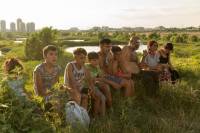
THESSALONIKI: For the first time in its history, the Thessaloniki Documentary Festival (5-13 March 2020) presents an international long documentary competition section, where 12 films will vie for the Golden Alexander and the Special Jury Awards.
![22nd THESSALONIKI DOCUMENTARY FESTIVAL [5-15/3/2020]](/media/k2/items/cache/f07a3d2900494dab43ef2102d4cb5700_Generic.jpg)
Exciting, dynamic, innovative - The Agora Doc Market aims high. 7 – 14 March 2020, 10:00 – 20:00, Warehouse C (Port of Thessaloniki)
THESSALONIKI: Agora Doc Market, the industry platform of the 22nd Thessaloniki Documentary Festival (5-15 March 2020), will be held from 7 to 14 March 2020. It is the most important market in Southeast Europe, the Mediterranean and the Middle Eastern regions.
The submissions are open for the 13th Film and Art Festival Two Riversides. We wholeheartedly encourage all artists to submit their film productions, especially to THE INTERNATIONAL SHORT FILMS COMPETITION. The deadline is set for May 31st, 2019. To
Festivals 21-03-2019The submissions are open for the 13th Film and Art Festival Two Riversides. We wholeheartedly encourage all artists to submit their film productions, especially to THE INTERNATIONAL SHORT FILMS COMPETITION. The deadline is set for May 31st, 2019.
To qualify for the competition, the fiction, documentary, animation, experimental films should be no longer than 35 minutes and be produced in 2018 or 2019. Older films may be allowed to the competition provided that the screening at the Festival will be their first presentation in Poland. The detail of the submissions criteria can be found in the REGULATIONS OF SUBMITTING FILMS.
All submissions are carried out through the festival page at the FilmFreeway platform:
www.filmfreeway.com/festival/tworiversides.
To find out more about the details of film submission you can address our Program Department at: This email address is being protected from spambots. You need JavaScript enabled to view it..
The 13th Film and Art Festival Two Riversides will take place July 27th – August 4th in Kazimierz Dolny i Janowiec nad Wisłą.
July 27th – August 4th is the time when every cinema lover should put down in their calendars. For the 13th time already we invite you to Film and Art Festival Two Riversides to Kazimierz Dolny and Janowiec nad Wisłą.
Festival Two Riversides is an international cultural event, which connects in its program all fields from which motion picture draws inspiration. Our Program Department lead by Grażyna Torbicka is in the process of working on this year's program and events.
During the festival we will show you productions from Poland and abroad, premieres and the most important films of the year, as well as interesting spectacles, exhibitions and concerts. The previous editions were largely popular: each year, the number of attendees grows. We hope that this year Two Riversides lovers will join us as well!
See you at Film and Art Festival Two Riversides in July/August 2019.
This year’s One World festival is also showing a total of 27 exclusive premiers (21 international, world and European premiers).
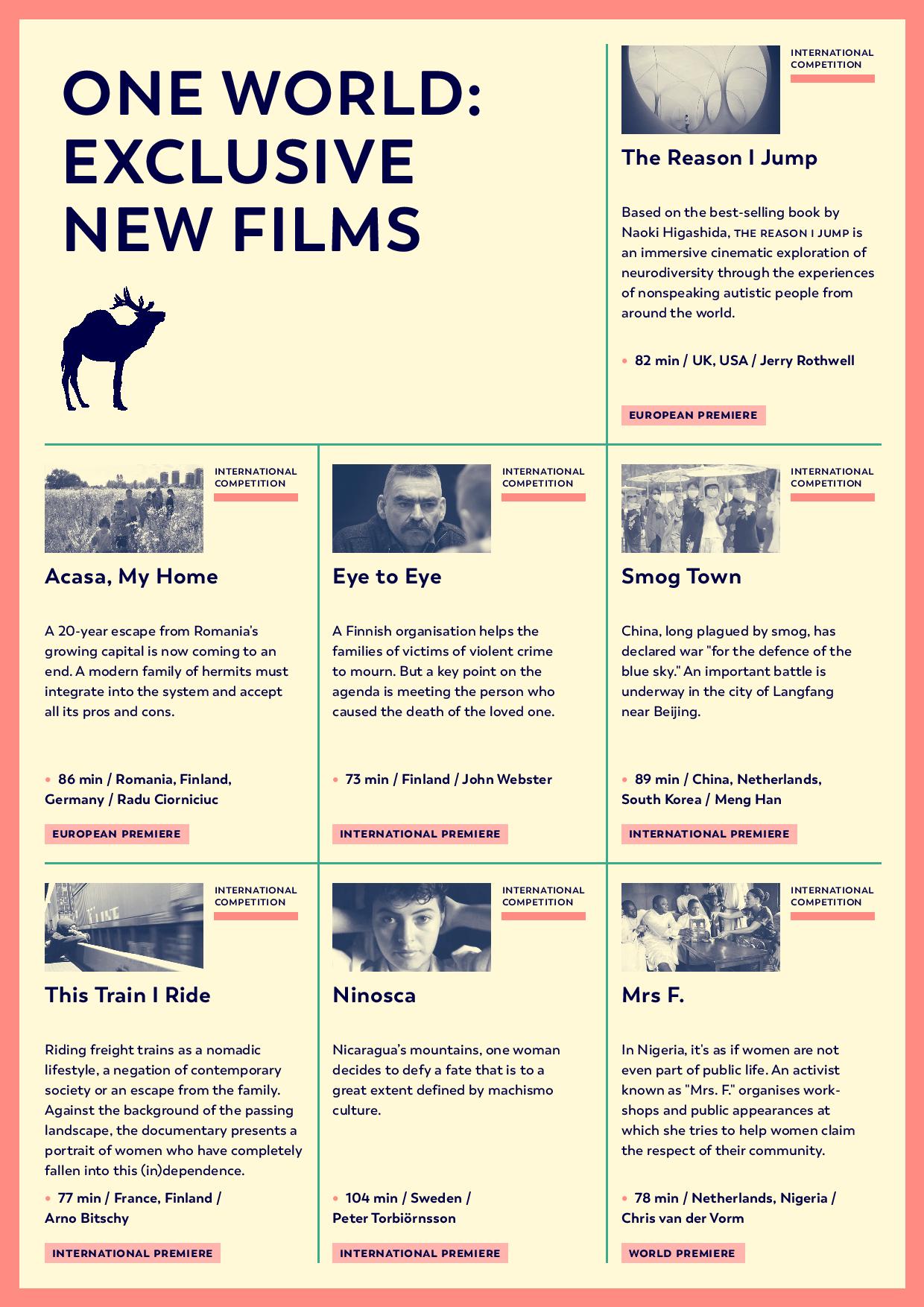
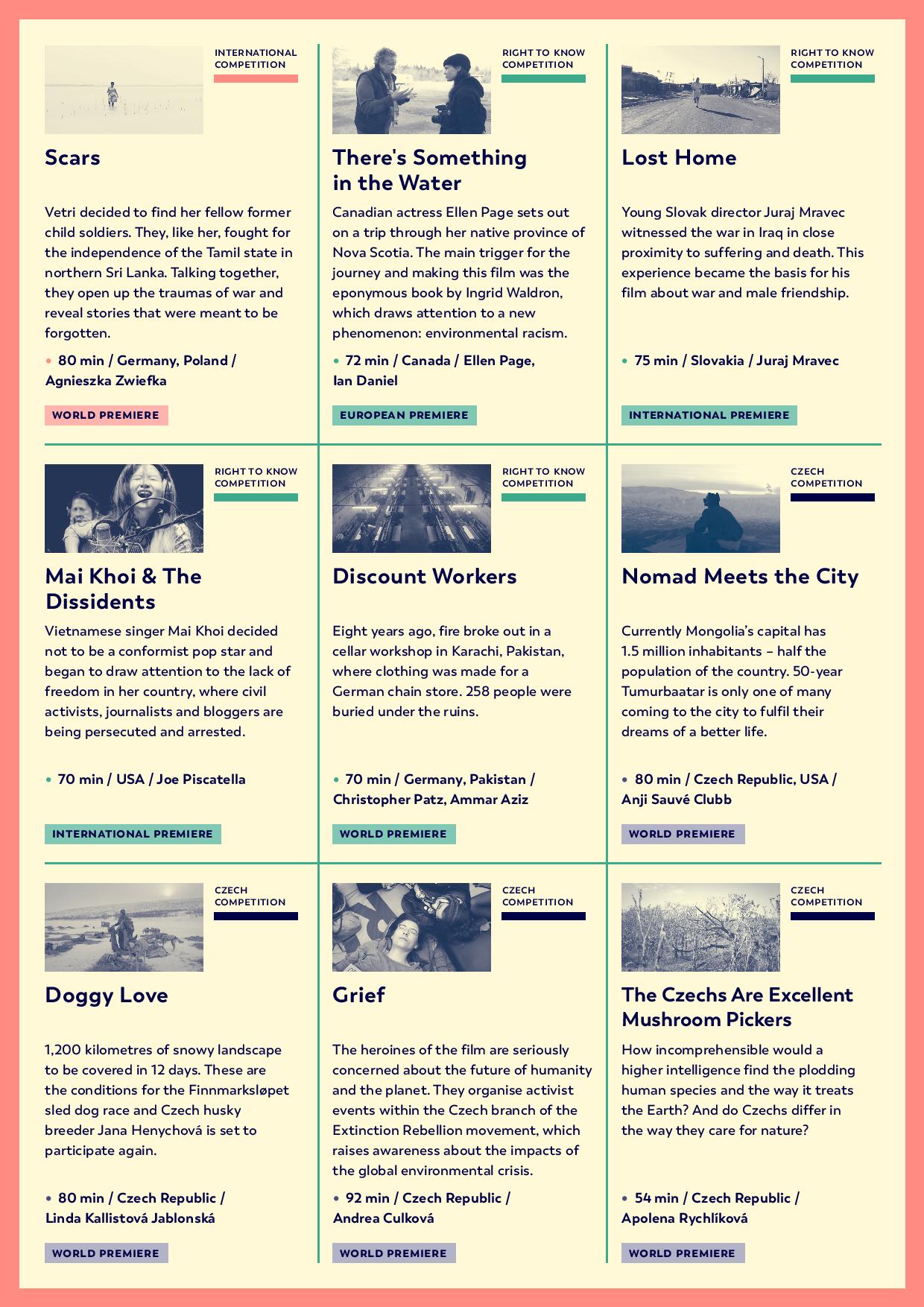
7 of them will compete in the International competition and include movies like Acasa, my home (European premiere) which has already scored at the Sundance film festival and was awarded the Special Jury Award for Best Documentary Cinematography or Ninosca (International premiere)– portrait of one woman from Nicaragua who decides to defy a fate that is to a great extent defined by machismo culture.
A new film by Canadian actress Ellen Page and director Ian Daniel There´s Something in the Water will be screened in a European Premiere and will compete in the Right To Know Competition. The main trigger for the journey and making this film was the eponymous book by Ingrid Waldron, which draws attention to a new phenomenon: environmental racism. In the same competition, the audience can watch a documentary in the international premiere of Mai Khoi & The Dissidents about Vietnamese singer Mai Khoi who decided not to be a conformist pop star and began to draw attention to the lack of freedom in her country, where civil activists, journalists and bloggers are being persecuted and arrested. The audience can also watch a world premiering documentary by Christopher Patz and Ammaz Aziz Discount Workers, about a fire that broke out in a cellar workshop in Karachi, Pakistan, where clothing was made for a German chain store. 258 people were buried under the ruins.
In the Czech competition, the movies will be screened in their world premier. Two of them, The Czechs Are Excellent Mushroom Pickers and Grief, are both focusing on climate change and what we can do about it. Film Nomad Meets the City is a portrait of 50-year Tumurbaatar from Mongolia who is one of many coming to the city to fulfill their dreams of a better life. And the fourth Czech movie Doggy Love shows a journey of Czech husky breeder Jana who is set to participate in the Finnmarksløpet sled dog race.
Over 100 documentaries in 17 programmes during 8 festival days
The 16th edition of the International Documentary Film Festival – ZagrebDox presents as many as 112 documentaries and this year takes place 15th–22nd March, at a new venue, CineStar Zagreb – Branimir Mingle Mall. The International Competition programme boasts 17 films competing for the Big Stamp Award, the main festival prize, and an equal number competing for the same award in Regional Competition, while the Little Stamp Award will go to the best film by an author under 35 years of age.
 *In a Whisper
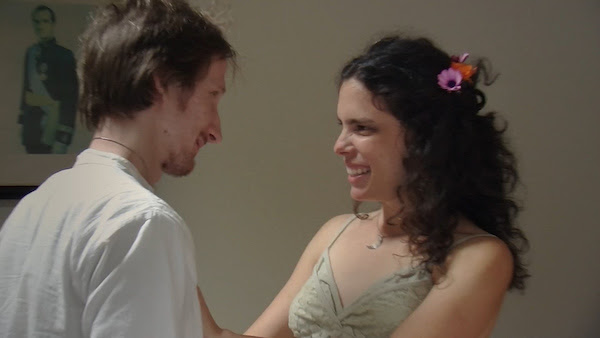
In addition to Oscar-nominated For Sama, by Waad al-Kateab and Edward Watts, and The Cave by Feras Fayyad, the International Competition offers an abundance of films arriving to ZagrebDox straight from their impressive international festival tours. The winner of the International Documentary Film Festival Amsterdam (IDFA), In a Whisper, by directing duo Heidi Hassan and Patricia Pérez Fernández, brings a story about friendship that surpasses geographical barriers, while IDFA mid-length competition laureate, Anticlockwise, directed by Iranian Jalal Vafaei, is a moving portrait of the author’ family and their struggle against the oppressive Iranian regime. Iranian filmmaking veteran Mehrdad Oskouei, winner of the IDFA directing award for Sunless Shadows, arrives with a devastating portrait of five young Iranian girls imprisoned for killing their abusive spouses or fathers. The ZagrebDox International Competition also includes last year’s IDFA First Appearance special mention winner Ilya Povolotskiy’s debut Froth, an astonishing cinematic study of a small eclectic community of “subpolar cowboys” living in the semi-deserted town on the shores of the inhospitable Barents Sea. The winner of the main festival prize at CPH:DOX, Ridge, directed by John Skoog, whom the jury described as the Swedish Tarkovsky, skilfully employs cinematic language painting a minutely detailed picture of an idle summer in Scandinavia. In the manner of a gripping thriller, Polish Wind. A Documentary Thriller, directed by Michał Bielawski, evolves into an extraordinary cinematic symphony about the unpredictable and destructive power of the wind that blows several times a year in the Polish region of Podhale.
*Exemplary Behaviour
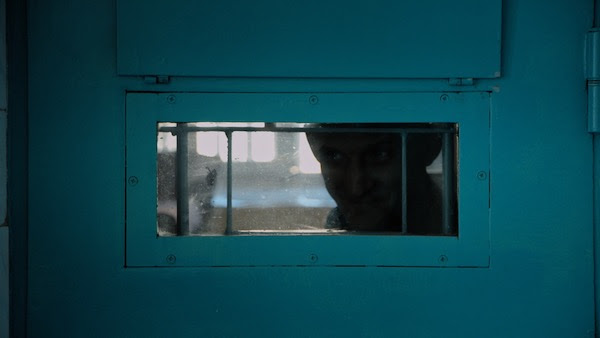
The winner of DOK Leipzig, Exemplary Behaviour, directed by Audrius Mickevicius and Nerijus Milerius, examines the notions of crime, justice and forgiveness by telling the story of the inmates of the Lithuanian prison Lukiškės. On the other hand, Swedish director Mikel Cee Karlsson attempts to shed some light on the fate of his best friend, gradually uncovering a previously hidden side of his life in Fraemling. Using documentary footage, interviews and reconstruction techniques to piece together certain scenes, the author weaves a story about the very fine line between sacrifice and guilt. Controversial Israeli lawyer Lea Tsemel, known for her fearless and impassioned advocacy for the rights of Palestinian political prisoners is the central protagonist of the impressive Advocate, which has earned directing duo Rachel Leah Jones and Phillippe Bellaiche numerous awards, including being shortlisted for an Academy Award. In his latest documentary, Midnight Family, winner of the Special Jury Award for Cinematography at Sundance, young American director Luke Lorentzen accompanies a Mexican family on frenzied and turbulent night rides as they race around the streets of Mexico City. Shot in cinema vérité style, the film follows the work of a privately owned ambulance service, in the process revealing fatal gaps in the state-sponsored healthcare system. Sundance Special Jury Award laureate The Painter and the Thief, directed by Benjamin Ree, is a tender and heartfelt story, which, skilfully avoiding sentimental traps, assembles a cinematic equivalent of a cubist painting of the unusual friendship between the two titular protagonists. Having scooped the Best Emerging Director Award at Locarno Film Festival for 143 Sahara Street, Hassen Ferhani arrives at ZagrebDox with an intimate and evocative documentary about a lone café in the middle of the Sahara Desert. The infamous Brussels neighbourhood Molenbeek, known for suicide bombers and police patrols, is portrayed through the eyes of two little boys from vastly different cultural backgrounds in Finnish director Reetta Huhtanen’s Gods of Molenbeek. The lyrically framed documentary succeeds in finding a fresh and imaginative way of broaching one of the most pressing issues of the present day – the (in)ability of coexistence in difference. Family secrets, repressed memories and unspoken trauma are at the centre of the family drama, It Takes a Family, in which director Susanne Kovács offers a complex, intimate story of her own family, the Holocaust and horrors from the past that, passed down from generation to generation, still haunt us in the present. Russian director Ksenia Okhapkina’s Karlovy Vary IFF Grand Prix winner, Immortal, perspicaciously examines the way the mechanisms of political power affect our everyday life, even in the most benign of situations.
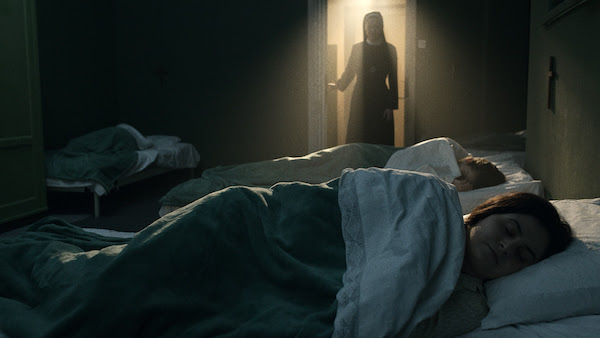
*Nun of Your Business
Competing for the Big Stamp Award, the Regional Competition also includes six Croatian titles, five of which will have their world premieres at ZagrebDox. Next to Little Star Rising by Slađana Lučić, screened last summer at Sarajevo Film Festival, the programme also includes latest films by Damir Čučić (Oxygen Nitrogen), Đuro Gavran (One of Us), Neven Hitrec (Push-Pull) and Branko Ištvančić (The Anonymous Shoal), as well as Ivana Marinić Kragić’s documentary debut Nun of Your Business, a love story found where you would least expect it. The soundscape of Radio Belgrade, one of Europe’s oldest radio stations, is the topic of the synesthetic feature, Speak So I Can See You, directed by Marija Stojnić, a Serbian-Croatian-Qatari co-production. B&H director Jasmila Žbanić returns to ZagrebDox with Airborne, an imaginative and intimate depiction of the secondary effects of war, in which the intense testimony of the director’s husband Damir about his fear of flying often veers into comical episodes. The topics of memory, war trauma and the interconnections between the past and the present are originally and movingly rendered in The Euphoria of Being, directed by Hungarian Réka Szabó. The film comes bearing a series of accolades, including the Locarno Film Festival Grand Prix, as well as the Sarajevo Film Festival Human Rights Award.
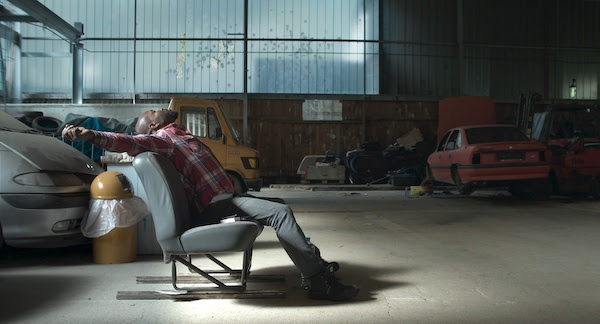
*Movements of a Nearby Mountain
Economic migration, in this case, in reverse – from Europe’s epicentre to South-eastern Europe, is the topic of Bulgarian Dream, directed by Srđan Šarenac. The film centres on a German pensioner who, unable to lead a comfortable life in her native country, relocates to Bulgaria, and tackles social issues, as well as the topic of ageing and the society’s marginalization of the elderly. The daily life of two elderly women living in the remote mountainous region of eastern Bosnia, steeped in local cultural heritage and rituals in complete harmony with nature, is poetically rendered in Then Comes the Evening, directed by Maja Novaković. In Siddhartha, Italian directing duo Damiano Giacomelli and Lorenzo Raponi offer a story about a father and son who choose the life in a secluded Italian village over the comforts of modern civilisation. Meanwhile, a family living in harmony with nature in the abandoned nature reserve only a stone’s throw away from the bustling urban centre of Bucharest is depicted in Acasă, My Home by director Radu Ciorniciuc. A remote town at the foot of the Austrian Alps is the locale of Sebastian Brameshuber’s Movements of a Nearby Mountain. The Cinéma du Réel laureate about a Nigerian immigrant making his living repairing cars amidst the grind of the mining industry is an examination of an individual’s place in the global economy. Romanian-German director Alexander Nanau’s Collective offers an uncompromising testament to the importance and impact of investigative journalism, tracing a case involving the disclosure of corruption in the Romanian healthcare system. Directors Vanja Dimitrova and Natasha Dimitrievska in Locked Storms take the viewers into the daily life of the inmates of a female correctional institution and the patients in a psychiatric hospital, normally tightly guarded from the eyes of the public. Siniša Gačić offers a different take on the Italian mafia, stripped of the usual fascination with the phenomenon, in Daughter of Camorra, focusing on a woman who used to be a member of the infamous Camorra organization but, after being released from prison, now has to face the challenges of daily life.
In addition to the competition programmes, the ZagrebDox audience can expect plenty of documentaries in other official programmes: Biography Dox, Musical Globe, Happy Dox, Controversial Dox, Masters of Dox, State of Affairs, Teen Dox and ADU Dox, while the programme Factumentaries will screen Children of Transition by recently deceased young director Matija Vukšić. The retrospectives section brings three programmes: the Lucy Walker Retrospective, featuring eight films by the British director whose accolades include an Emmy Award and two Academy Award nominations, while the programme Female Directors in Croatian Documentary Production, curated by Diana Nenadić, offers a cross section of Croatian documentary cinema made by women in the past five decades and features films by directors such as Milica Borojević, Snježana Tribuson, Katarina Zrinka Matijević, Tatjana Božić and Dana Budisavljević. Meanwhile, the Author’s Night programme is this year devoted to acclaimed Croatian director Goran Dević. Novelties this year include a new programme titled Eco Dox, devoted to the effects of the global ecological crisis, and the Filmmakers on Filmmakers programme featuring portraits of the titans of world cinema by renowned directors.
In addition, ZagrebDox Pro includes several events open to the public, including masterclasses by Dana Budisavljević and Lucy Walker, while ZagrebDoXXL special events feature panel discussions on topics problematized by the films in the programme, such as the migration crisis, vaccination, gentrification and climate change. Once again, the audience will have a chance to attend gratuitous screenings of all the films in the International and Regional Competition, in earlier slots during the day, while after the festival closing ceremony, on Sunday 22nd Mar, all the awarded films will also be screened in the The Best of Fest programme.
Ticket sales begin in early March, while tickets will be available at the CineStar Zagreb – Branimir Mingle Mall box office, at ticket machines in the cinema foyer, as well as online, at blitz-cinestar.hr and via the iCineStar mobile app.
ZagrebDox is supported by the City of Zagreb and the Croatian Audiovisual Centre, while ZagrebDox Pro receives the support of the MEDIA sub-programme of Creative Europe. The general sponsor of ZagrebDox is Croatian Telecom.