Beldocs Festival from 7 to 14 May in Belgrade
The forthcoming Beldocs International Documentary Film Festival opens on 7 May at 7.30 pm at the Sava Centre’s Great Hall with the premiers of two Serbian documentary films: ‘In Praise of Nothing’, by Boris Mitic and ‘Kaktus Bata’s Last Adventure’ by Djordje Markovic.
Without any doubts, one of the most exclusive guests of 11th Beldocs will be Ruth Beckermann, an Austrian film director, whose film ‘Waldheims Walzer’ has received an award for the best feature-length documentary film at recently finished Berlinale. She will be staying in Belgrade in May, where her highly specific film, selected for the Beldocs Festival’s Biographical Documentary Programme, will be presented to the Serbian audience.
There is a great interest among the media for the scheduled arrival of Abel Ferrara, a cult American feature-film director, who will be a guest of 11th Beldocs Festival with his documentary film ‘Piazza Vitorrio’. Abel Ferarra – who is always expected to create a provocation – has actually made a significant number of documentary films.
The film ‘Piazza Vitorrio’ is a chronicle of the liveliest town square in Rome, where all multi-cultural varieties of the city are felt in full. The square is a constantly animated multi-ethnical centre, a residence to Romans, Asians, Africans and Indians. Walking down the Square, Ferarra enters into conversation with square residents on their origins, reasons for coming, a desire to stay. And on survival in the cruel modern world. Precisely on account of its very colourful structure, Piazza Vitorrio has become a favourite spot for many artists, including Ferarra himself, who, for that very reason, with a documentary film structure, succeeds in reaching its core and enters the interior of its unique dimension. For the Square is made of people and their stories. Through his approach, Ferrara opens the door for them to confide in him. The diversity of the content has not been represented to that extent in any of the recent films, as it is the case in Piazza Vitorrio. In that respect, Ferrara reveals why precisely Piazza Vitorrio has become such an inspiring muse for many great filmmakers, including Pasolini to whom he dedicated his last film, featuring William Dafoe, who also makes a significant appearance in Piazza Vitorrio.
BelDocs Festival:
During the last decade, Beldocs Festival has become the most loved spring documentary film festival, which gathers the best works of contemporary documentary filmmaking. The most important contemporary documentary films have had its premiere precisely at Beldocs. In this year, again, a documentary film market will be organised, for the second time supported by the European Union through the Programme: Creative Europe, sub-programme Media.
This year, as well, Beldocs is continuing to develop and educate its audience through a quality and premiere programme, offering, in addition to domestic, an international selection, as well as numerous accompanying programmes of events, among which Feel Good Movies and Biographical Documentaries proved to be the most loved. This year, in addition to Sava Centre, Beldocs will be held at Dom Sindikata, Kinoteka’s film theatres at Kosovska and Uzun Mirkova Street, the cinema Fontana and the Museum of Contemporary Art.
This year, a #europeanfilmchallenge prize competition has been launched, in which the documentary film audience compete for valuable prizes – a full paid trip to an A category film festival. After Berlinale, the next round is a trip to Cannes and the second round started on 12 February. The rules are the following: a competitor should see 10 European documentary films on any of legal platforms (VoD, SVoD, cinema, festival, television, etc.), name the film and the platform, publish a photo as a proof and hash tag #europeanfilmchallenge. After certain period of time, the competition organiser will select a winner, who will receive this attractive prize.
This year’s 11 Beldocs Festival takes place from 7 to 14 May.
The following grants were announced on 29 March 2018.

WARSAW: SPI International/Filmbox expands to Finland by launching FilmBox Art House channel on Ålcom.
FNE IDF DocBloc: Documentary Filmmakers and Journalists in CEE under Growing Pressure
Czech Republic 30-03-2018Estonian producer Max Tuula, Polish filmmaker Konrad Szołajski, Azerbaijani TV Executive Editor for Features Kenan Aliyev, Bulgarian filmmaker Vesela Kazakova and Czech filmmaker and producer Filip Remunda attended Prague's East Doc Platform discussion New Resistance, organised by the Institute of Documentary Film.
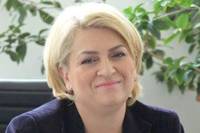
BUCHAREST: Doina Gradea was elected by the Romanian Parliament as general manager of the Romanian public broadcaster (SRTV) on 28 March 2018. She was appointed acting general manager in September 2017 after the rejection of the activity report on 2016 and thus the dissolution of the Council of Administration led by the former general manager Irina Radu.
These animated film production and development grants were announced by the Estonian Film Institute at the end of March 2018.
Within the context of Eurimages’ Strategy for Gender Equality in the Film Industry, aiming to implement equality in the number of applied and approved projects by male and female authors (i.e. 50/50 by 2020), it was announced at the 150th meeting that 30% of approved projects are by female directors.
Mare is written and directed by Andrea Štaka, the cinematographer is Erol Zubčević, and the art director is Jana Plećaš. The film is a co-production with OKOFILM Productions (Switzerland) and Dinaridi Film (Croatia) and will be shot, in full, on location in Konavle and Dubrovnik. The producers are Thomas Imbach and Andrea Štaka in Switzerland and Tena Gojić in Croatia. The film stars Marija Škaričić, joined by Goran Navojec and Goran Bogdan in supporting roles.
The film revolves around Mare who lives in Konavle, a short distance from Dubrovnik Airport. Her daily life goes by routinely; she is a mother, wife and homemaker. Her laidback demeanour will take her on a quest to find personal freedom after which she will never be the same woman again.
The project was developed with support from MEDIA Switzerland, while production support comes from the Swiss Ministry of Culture, the Zurich Film Fund, ZDF Arte, the Croatian Audiovisual Centre and the City of Dubrovnik.
A full list of supported projects can be found here.
PRAGUE: More than 10,000 people have signed the appeal initiated by leading Czech filmmakers in support of the Czech Television. The appeal is a reaction to President Miloš Zeman's inauguration speech on 8 March 2018, when he attacked the public broadcaster and other journalists.
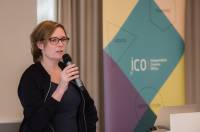
The UK’s Independent Cinema Office has been running the Developing Your Film Festival training course since 2010. It is the world’s only professional development course for people working at film festivals. The course has so far trained over 200 people from more than 50 different countries worldwide, and takes place in a different location each year. The course is delivered by experts from leading festivals from around the world. One of them is Juul Veenboer, a Head of IT Department at International Film Festival Rotterdam (IFFR). Juul has experience in working with festival locations, technique, events, volunteers, and logistics. She is also involved with ticketing, database implementation and the technical development of the website.
You have started your career as an intern in the International Film Festival Rotterdam. What has entangled your interest in working at a film festival?
Well, I always went to this film festival and I really liked it. Actually, the first time I visited the festival was with my parents. Later, during my study years, I thought it would be a really cool place to work in and I did the internship, not really knowing what to expect. I really enjoyed it and consequently, I stayed here… for a long time.
You have worked in various departments within the festival. Currently, you are Head of IT Department. What are the strengths of changing work positions in the festival?
It especially has been really helpful for a job I have now. I kind of oversee all the digital work process we have. Thus, it is very handy that I have worked in many departments so I have inside knowledge and information about work process there. I think it helps you understand other departments better if you know them, been working for them. I have colleagues who are in the same place for a long time, who specialize in their subject. For me, I really enjoy seeing that much of the festival. However, I wouldn’t say that other people should definitely do that. For instance, to build a career for a festival programmer it takes a lot of years and involvement, changing departments for them wouldn’t work.
You are Head of IT Department in IFFR. The festival states that it decided to pay more attention to IT and innovation. Why are these two traits important for a film festival?
IT can make your life easier, for starters. The best communication you have is throughout your website. So it has to work and look nice. Basically, it should always develop. Our festival has a big programme it can overwhelm a person and it becomes difficult to know where to start from. For this reason, we have developed an online first aid kit with questions that help a person to navigate through the website. We have also developed a mobile application, which focuses on a persons’ visit during the festival. Basically, the website gives you all the information and the app – the information you need when you visit the actual festival. We want to keep up with all the developments, so our focus is to be technically ready to switch when needed. If there is a new possibility to adapt, we want to implement it in the festival. It is important to keep up.
I guess it is not only important to make it easier for the audience to navigate, but your colleagues too?
Yeah! We really take a close look at all the digital processes and we seek for what we can improve. Two different Excel sheets means mistakes and sometimes we bump into colleagues who have 13 Excel sheets. We don’t want to digitalize everything because some work just needs to be done by hand. But there are things that can be done in a different way to make your life easier. We look at ways to make it and I want to see if we can get rid of those Excels in the offices.
You mentioned that while developing your website you would like it to be handy for the audience. How are you learning what your audience needs?
We know our audience fairly good, we give them suggestions based on their previous activities and by doing research. We are still learning a lot about how to segment our target groups and what to offer them. We try to make it more and more personal. For example, if a person goes to 13 Japanese films if we have something in the newsletter about Japanese films that is one of the first topics in that persons’ newsletter. We want to turn this way because then a person gets a newsletter that makes him happy and makes him feel more involved and engaged. We are not there yet, it is something that should evolve during coming years, but that’s the way we want to go. If we offer you good service, you will comeback more often.
When you worked as a Head of Production for IFFR, you have managed a lot of people at once. What were your tactics to maintain a relationship and quality communication with the people you coordinate?
It is difficult. What I try to do is to keep the core team that is involved in all the producers really close. We have meetings every morning every day, during the festival. Of course, before the festival, you have more time, and then it is important to make sure that there is room for fun. As everybody knows, film festivals are hard work so I always try to make sure that everybody is connected and has a nice time. Still, with such a big crowd, it is complicated, especially two weeks before the festival when it gets really hectic. This is the crucial moment when you start losing people and connections with them because everyone has too much on their plate. That’s the time you have to pay a really close attention to all the processes going on.
With volunteers, it is a little bit different. It is difficult when you are in the office year long, developing policies and agendas, how a director or a guest should be met. Those volunteers, people who actually need to do it are not part of that decision-making process. Moreover, I am not standing there behind them making sure that it is done the way we planned. It is very important and yet difficult to get all the processes that you developed during the year out from your head into theirs. Trying to make sure everybody gets the essentials we had made an animation film, showing how it should be done. This year we made a quiz, making sure that everybody reads the material we send, because everyone wants to score 10. It is a challenge we are learning from.
Several times you have mentioned that two weeks before the festival are the most hectic. I am sure that there are colleagues who are in those two weeks period at the moment. What would you say to them?
Good luck, it‘s too late! Two weeks before the festival are the most stressful weeks. I would only wish them good luck. The thinking process should be over then, you should only be thinking about doing the job you have thought of earlier. The only things I can say are keep up the good work and the hard work.
But I think, we, working in the film festivals, tend to look at our events year round. After the festival, you feel tired, but you have to look ahead, to 2020, 2021, to your next edition. You really have to focus on what are my goals, what do I want to achieve and what do I need to do now for the festival for coming years. Because of the hard work, festivals sometimes tend to not take enough time to think about their profile in the few years. If you want to still be active in few years then you have to look forward. I think because of limited budget and time that’s sometimes forgotten.
Meanwhile planning this year festival you should also foresee its future?
Yes. We are looking ahead and making plans because there will be important decisions in the future. We at IFFR want it to be more innovative and make more difference than we already make. Thus, if we want to achieve those goals we have to find space to think. And working in the festival, I know that this is a challenge to find that time and space, but that’s important.
*
The course is funded by Creative Europe and the British Council. This year the ICO is proud to be delivering the course in partnership with Vilnius International Film Festival from 20-25th March.
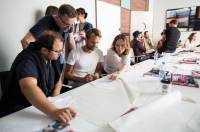
New Horizons Studio+, organized by the New Horizons Association and Creative Europe Desk Poland, is a training programme for first and second-time directors and producers willing to work in international environment. It consists of 4 days of workshops and lectures on different aspects of project promotion and development. Its main task is to provide young professionals with knowledge about the international film market, as well as to help them in determining their career paths.The partners of New Horizons Studio+ are EAVE and London Film Academy.
The 20 participants of the eighth edition will include 10 individuals from Poland (five director–producer pairs) selected from among applicants, as well as 10 individuals from abroad recommended by event partners.
DATES: 27 – 30 July, during 18. New Horizons International Film Festival (26 July -5 August 2018).
Applications from Polish participants will be accepted from 27 March through 31 May 2018. Filmmakers from other countries interested in New Horizons Studio+ should contact: Weronika Czołnowska at This email address is being protected from spambots. You need JavaScript enabled to view it.
DEADLINE FOR APPLICATION: May 31st, 2018