MAIN COMPETITION Golden Frog: On Body and Soul
cin. Máté Herbai
dir. Ildikó Enyedi Silver Frog: Loveless
cin. Mikhail Krichman
dir. Andrei Zvyagintsev Bronze Frog: First They Killed My Father
cin. Anthony Dod Mantle
dir. Angelina Jolie*** *** ***
FIPRESCI AWARD
The International Critics Prize to the director of the best film in the Main Competition – under specific consideration of its cinematography: Sweet Country
cin. Dylan River, Warwick Thornton
dir. Warwick Thornton
*** *** ***
AUDIENCE AWARD
Camerimage Audience Award: Three Billboards Outside Ebbing, Missouri
cin. Ben Davis
dir. Martin McDonagh
*** *** ***
POLISH FILMS COMPETITION
Best Polish Film: The Art of Loving. Story of Michalina Wislocka
cin. Michał Sobociński
dir. Maria Sadowska*** *** ***
STUDENT ETUDES COMPETITION
Laszlo Kovacs Student Award - Golden Tadpole – All of Us
cin. Felix Striegel
dir. Katja Benrath
school: Hamburg Media School (HMS)
Silver Tadpole: Across the Street
cin. Tom Durand
dir. Jeanne Privat
school: Institut National Superieur des Arts du Spectacle et des Techniques de Diffusion (INSAS)
Bronze Tadpole: Rocco
cin. Martín Urrea
dir. Gerard Nogueira
school: Hamburg Media School (HMS)*** *** ***
DOCUMENTARY FEATURES COMPETITION
Golden Frog — to a documentary film: Radio Kobanî
cin. Nina Badoux
dir. Reber Dosky
Golden Frog — to a docudrama: Potentiae
cin. Ricardo Garfias
dir. Javier Toscano
Special Mention: Normal Autistic Film
cin. Miroslav Janek
dir. Miroslav Janek*** *** ***
DOCUMENTARY SHORTS COMPETITION
Golden Frog — Grand Prix: Zhalanash - Empty Shore
cin. Marcin Sauter
dir. Marcin Sauter
Special Mention: Find Fix Finish
cin. Nikolai Huber
dir. Sylvain Cruiziat, Mila Zhluktenko *** *** ***
DIRECTORS’ DEBUTS COMPETITION
under the patronage of the Polish Filmmakers Association (SFP)
Best Directorial Debut: Borg McEnroe
cin. Niels Thastum
dir. Janus Metz*** *** ***
CINEMATOGRAPHERS’ DEBUTS COMPETITION
under the patronage of the Polish Filmmakers Association (SFP)
Best Cinematography Debut: Winter Brothers
cin. Maria von Hausswolff
dir. Hlynur Pálmason*** *** ***
MUSIC VIDEOS COMPETITION
Best Music Video: Leningrad "Kolschik"
cin. Genrih Meder
dir. Ilya Naishuller
Best Cinematography In A Music Video: alt-J "3WW"
cin. Dustin Lane
dir. Young Replicant*** *** ***
FIRST LOOK - TV PILOTS COMPETITION
Best Pilot: Black Spot: Stranger Comes To Town
cin. Christophe Nuyens
dir. Julien Despaux, Thierry Poiraud
The People's Jury of the 11th Five Flavours Asian Film Festival has awarded the Grand Prix of the Festival to "Free and Easy" (Hong Kong 2017) directed by Geng Jun. The 3500 euro award was founded by the Polish Film Institute.
The Special Mention goes to "KFC" (Vietnam 2017) directed by Lê Bình Giang.
The NETPAC Jury chose "Marlina the Murder in Four Acts" (Indonesia/Malaysia/Thailand/France 2017) directed by Mouly Surya as the best picture of the festival.
People's Jury included: Jowita Agnieszka Czubek, Dominika Drzastwa, Agata Herbich, Maja Jankowska, Katarzyna Karpińska, Michał Mielnik, Julia Niedziejko, Paweł Skrzypczak, Szymon Szeszuła, Patrycja Wysokińska, Marcin Zwolan. The NETPAC (Network for the Promotion of Asia Pacific Cinema) Jury included: Siddiq Barmak, Cüneyt Cebenoyan, and Sonali Joshi.
FESTIVAL GRAND PRIX AWARDED BY PEOPLE'S JURY: FREE AND EASY (dir. Geng Jun, Hong Kong 2017)
For a brave social satire disregarding the censorship, for creating a unique cinematic space in which the Chinese province becomes the background for an ironic tale of evil, and for the subversive use of soap as a weapon of mass destruction; the People's Jury of the 11th Five Flavours Asian Film Festival chooses "Free and Easy" directed by Geng Jun as the best film of the New Asian Cinema section.
SPECIAL MENTION AWARDED BY PEOPLE'S JURY: KFC (dir. Lê Bình Giang, Vietnam 2017)
For combining genre conventions with a non-compromising, auteur vision, for the pop cultural potential and a pioneering contribution to Vietnamese exploitation cinema, and finally for crossing the borders of taste between Coca Cola and Pepsi; the People's Jury awards the Special Mention to "KFC," the debut feature by Lê Bình Giang.
NETPAC JURY AWARD: MARLINA THE MURDERER IN FOUR ACTS (dir. Mouly Surya, Indonesia/Malaysia/Thailand/France 2017)
"Marlina the Murderer in Four Acts" was our unanimous choice for the NETPAC award at this year’s Five Flavours Film Festival. The film has a unique singular vision, particularly in its stylistic qualities, using the iconography of the western transposed onto contemporary Asian landscapes. It is striking and challenging, and carries with it exceptional qualities in editing and sound design in particular. Mouly Surya is no doubt one of Asian cinema’s outstanding talents today, and she brings her distinctive voice to this film.
Congratulations to the winners!

Fest Anca International Animation Festival has just opened its call for 2018 entries. Our webpage has all the info you need about our free submission process.
Registration is open until February 25, 2018. Only short animated films and music videos created after January 1, 2016 can be accepted for competition.
Interested in submitting your film right away?
Here's the link to our entry form.
Competition Awards:
- Anca Award (EUR 800) for the best film of the festival
- Anca Student Award (EUR 400) for the best student film
- Anca Music Video Award (EUR 400) for the best music video
- Anca Kids' Award (EUR 400) for the best film for children
- Anca Slovak Award (EUR 700) for the best Slovak film
- D Award (distribution prize for Slovak film)
Fest Anca 2018 will be held from June 28 to July 1, 2018 in Zilina, Slovakia.
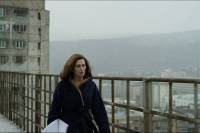
TBILISI: Ten debut features will compete for the Golden Prometheus (for best film) and Silver Prometheus (for best director) in the main competition of the 18th Tbilisi Film Festival. The most important film festival in Georgia will run from 4 to 10 December 2017.
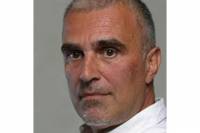
BERLIN: Ex-Yugoslavia-born producer Cedomir Kolar will receive the European Co-production Award - Prix Eurimages at the European Film Awards Ceremony, that will take place in Berlin on 9 December 2017.
This year’s EUROPEAN CO-PRODUCTION AWARD – Prix EURIMAGES, an award acknowledging the decisive role of co-productions in the European film industry, goes to the producer Cedomir Kolar.
Cedomir Kolar has been active in film production for more than 30 years. He was born in former Yugoslavia, in the city of Rijeka on the Adriatic coast of Croatia, and graduated in film production at the Belgrade Academy of Dramatic Arts. He has produced over 30 feature films by authors from all over the world. He is an Oscar Nominee for BEFORE THE RAIN by Milcho Manchevski and an Oscar winning producer for Danis Tanovic's NO MAN’S LAND.
In 1991 he joined Noe Productions in Paris where he produced BEFORE THE RAIN by Milcho Manchevski, AS YOU LIKE ME by Carmine Amoroso, TRAIN OF LIFE by Radu Mihaileanu, THE ADOPTED SON and THE CHIMP by Aktan Abdykalykov, NO MAN'S LAND by Danis Tanovic and Danis Tanovic's short film in the collection of films 11'09''01-SEPTEMBER 11, produced by Galatée Films and StudioCanal.
In 2003 he launched a new Paris-based production entity, A.S.A.P. Films, together with director Danis Tanovic and fellow producer Marc Baschet. In 2005, A.S.A.P. Films produced the new feature by Danis Tanovic, HELL (L'ENFER), written by Krzysztof Piesiewicz in collaboration with the late Krzysztof Kieslowski, and WELL TEMPERED CORPSES by Benjamin Filipovic. This was followed by Marion Hänsel's SOUNDS OF SAND (SI LE VENT SOULÈVE LES SABLES) in 2006, Danis Tanovic's TRIAGE and Srdjan Karanovic's BESA in 2008, WOMB by Benedek Fliegauf, THE LIGHT THIEF by Aktan Abdykalykov, CIRKUS COLOMBIA by Danis Tanovic and BLACK OCEAN by Marion Hänsel (in 2010), THE LUNCHBOX by Rites Batra (2013), ALBÜM by Mehmet Can Mertoglu (2016) and FOXTROT by Samuel Maoz (2017). Most of these films have been supported by Eurimages.
Cedomir Kolar was member of the EFA Board from 2004 to 2014.
The EUROPEAN CO-PRODUCTION AWARD – Prix EURIMAGES will be presented during the European Film Awards Ceremony on Saturday, 9 December, in Berlin.
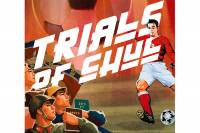
TALLINN: The Baltic Event Co-Production Market selected 16 projects to be presented on 29 November – 1 December 2017 at the Black Nights Film Festival.
EFADs Encourages Support of European Parliament Position on Territorial Exclusivity
Region 22-11-2017BRUSSELS: The European Film Agency Directors, EFADs, welcomed the European Parliament Legal Affairs Committee’s support for territorial exclusivity in a statement on 21 November 2017.
BRUSSELS: The Federation of European Film Directors, FERA, made a public statement welcoming the decision of the Members of the Legal Affairs (JURI) Committee vote in the EU Parliament to limit the extension of the “Country of Origin” principle to news and current affairs programmes. The decision means that exclusive territorial licensing, cornerstone of audiovisual works’ investment structure, distribution and promotion throughout Europe are preserved in their present form.
EFADs welcomes the EP Legal Affairs Committee’s support for territorial exclusivity and strongly encourages all Members of the European Parliament and all Member States to support its position.
Press releases 21-11-2017
On 21st November 2017, the European Parliament’s Legal Affairs Committee limited the scope of the European Commission’s “Proposal for a Regulation laying down rules on the exercise of copyright and related rights applicable to certain online transmissions of broadcasting organisations and retransmissions” to only news and current affairs programmes.
Peter Dinges, President of the European Film Agency Directors (EFADs) welcomes the vote: “By opposing and reducing the scope of the country of origin principle, the Legal Affairs committee showed its support for territorial exclusivity and remains faithful to its long-standing position in favour of a culturally diverse audiovisual sector and to EU citizens’ access to European culture. We therefore warmly thank the Legal Affairs committee to support such an objective and we strongly encourage all Members of the European Parliament and all Member States to support its position.”
The EFADs constantly defended territorial exclusivity, which is essential for the sustainability of the audiovisual sector and the circulation of European films across the EU. Without territorial licences we would see less investment in European films, fewer co-productions, less competition, and finally European audiences would have less access to a diversity of European audiovisual works in the Digital Single Market. Improving access to these works can only be achieved by an ambitious approach in other EU initiatives, such as the Audiovisual Media Services Directive and the Creative Europe Media Program, and not by undermining the financing model of European films.
Peter Dinges concluded: “One of the key objectives of the EFADs is to ensure the sustainability of the audiovisual sector and improve the circulation of European films across the EU. We welcome the EP Legal Affairs Committee position and we want to continue working with the European institutions to achieve this objective and adopt solutions which are in the interests of the European industry and audiences, and in the spirit of the EU Treaties.”