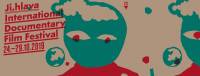
The 23rd edition of the Ji.hlava IDFF will kick off in two weeks! New films from the region, world documentary debuts, a showcase of works by Ukrainian director Feliks Sobolev, documentary experiments, films made by women about women, and a special reflection of 1989.
From the total of 277 films screened at Ji.hlava, 91 will be shown in their world, 47 in their international, and 17 in their European premiere. 3700 films altogether have been submitted to the Ji.hlava IDFF 2019.
Ji.hlava’s official spot: After Godard, Dvortsevoy
“Ji.hlava has always strived for discovering and interconnecting original filmmakers across countries and regions,” says Marek Hovorka, the festival’s director. “Unlike last year, when we presented a large retrospective of direct-cinema-verité, combining the filmmaking production of the USA, Canada and France, we this year decided to dedicate substantial attention to Eastern European filmmakers”, adds Hovorka. This year’s author of the official festival spot – after Jean Luc Godard who honored Ji.hlava in 2018 – will be Kazakhstani director Sergei Dvortsevoy. The festival will present also a comprehensive retrospective of his films. The work by Ukrainian director Feliks Sobolev can literally be called an international discovery. His profile will be complemented with a unique showcase of Ukrainian experimental films from the 1960s until 1990s.
Woman in Change: Films by and about women
Another important program theme of this year’s edition will be “Woman in Change”, a topic introduced also in the festival trailer. This year, the trailer consists of a single take: a look on the face of actress Samal Yeslam. “Dvortsevoy captured her face just by chance; the scene was not scripted, shot outside the set of his last feature film, Ayka. Although Yeslam won the best actress award in Cannes for her role in the movie, she is being ‘just herself’, standing on an underground platform,” explains Hovorka. And he continues: “In the recent years, the role of women in the society has been becoming more prominent, and not only in the society, but also in documentary filmmaking.” Hovorka believes that films created by women draw our attention by evocatively opening painful issues, being formally innovative and lending an empathic ear to the stories of others. These include the exploration of female identity in the film essay by German director Pia Hellenthal (Searching Eva), the topic of rape brought up by French director Alexe Poukine (That Which Does Not Kill), and the world-known Harvey Weinstein case investigated by British director Ursula Macfarlane (The Untouchable).
Opus Bonum, Best Central&East European Docs and Remarkable World Debuts
What else can festival visitors look forward to? The Opus Bonum section dedicated to international documentary titles will this year offer nine selected films from France, the UK, India, Madagascar or Palestine. One will be an adaptation of the globally successful novel, Europeana, by Patrik Ouředník, first published eighteen years ago and since then translated into thirty-six languages. The filmic “pun” made by French director Arnaud de Mezamat called Wishing You the Same calls for the “contemplation on various aspects of humanity”.
The Between the Seas section focusing on the region of Central and Eastern Europe will introduce sixteen film titles. It includes a cinematic portrait of famous Slovak photographer Andrej Bán, Earthly Paradise, directed by Jaroslav Vojtek and an original collage 365 Days Also Known as a Year by Ukrainian director Dmytro Bondarchuk. The section will present world and international premieres of outstanding films also from Romania, Hungary, Estonia, Serbia and Latvia. The awarded film will receive a cash prize of 10,000 EUR.
This year’s First Lights section will again be prominent with nine noteworthy film debuts ranging from Colombia to Turkey. The Set Off by Turkish director Mustafa Emin Büyükcoşkun recalls the destinies of thirty-three people killed in Syrian city of Kobane, while the Canadian author Loic Darses examines the Quebecois identity in his Where the Land Ends.
Twenty-one Czech films: from Václav Havel to the Antarctic
The Czech Joy section will include unprecedented twenty-one competition titles. Director Adéla Komrzý will introduce Viva video, video viva about her grandfather Radek Pilař who takes on a surprising role of the founder of Czech video-art. Věra Čákanyová will present her doc FREM that was made in the extreme conditions of the Antarctic and is described as an “audio-visual requiem for homo sapiens”. Radovan Síbrt will introduce his film, Two Roads, dedicated to the famous Czech band, The Tap Tap, composed of handicapped musicians. The thirtieth anniversary of the Velvet revolution is the focus of director Robert Sedláček whose film is asking the question: Have the goals of the revolution in 1989 been met?
“Thirty years after the fall of the Communist regime in former Czechoslovakia, we have come up with a special program section entitled Studio 89,” says Marek Hovorka, and he continues: “Three different programs will offer a look on the figure of Václav Havel, an intellectual icon of political transformation: underground films, a portrait made by Juraj Herz which has never been released in Czechia, and a preview of an upcoming film by Petr Jančárek about Havel’s final years. These documentary films will explore conspiracy theories and offer a microstudy of the revolution, in this case directly at Prague’s FAMU.” A six-hour-long opus Communism and the Net by Karel Vachek, the legend of Czech cinema searches for the roots of today’s crisis of democracy.
Testimonies and Experimental Cinema
The festival’s Testimony section will include eleven films, notably The Cave by Syrian director Feras Fayyad who won an award for his Last Men in Aleppo two years ago at Ji.hlava. The film was then nominated for the Academy Awards. His latest film narrates a powerful story of Doctor Amani Ballor who with her colleagues treated patients in an underground hospital in besieged Syrian town of Ghouta.
The non-competition section Special Event will bring a unique documentary title, Crisis by the Czech-American photographer and film director Alexandr Hackenschmied – a film made in 1939 in the United States that closely observes the political and social events in Europe in 1938.
Experimental documentary films are a fixture of each year’s festival program. The Fascinations is a section dedicated to world cinema, EXPRMNTL.CZ, in turn, focuses on Czech experimental titles. “Fascinations introduce films that are seeking for new concepts of reality,” says the programmer, Andrea Slováková, who has selected the program for both of these sections. For example, the Chinese title Action, Almost Unable to Think captures the inner world of a soldier killed by explosion. The Wilds is a film that incorporates performance, land-art and artistic installation. Last but not least, Czech visual artist Zbyněk Baladrán will present his essayistic film called Powerless Source of All Power. Together with the award, the winner of the EXPRMNTL.CZ section will this year receive a prize of 50,000 CZK (2,000 EUR, in partnership with The Art Zone 8smička).
Translucent Being: Feliks Sobolev
In addition to experimental films by versatile avant-gardist Man Ray, one of the big discoveries of this year’s Ji.hlava IDFF will be the work by Ukrainian filmmaker Feliks Sobolev (1931–1984). His oeuvre will be presented in the section Translucent Being. “Our aim is to introduce directors who have pushed the boundaries of documentary film reflection,” says Andrea Slováková, the section’s programmer. She calls Sobolev a legend: since 1960s, he has been considered one of the greats of Soviet documentary filmmaking, his films were sold-out, and yet he is still completely unknown outside Ukraine. “He discovered new creative techniques: working with animation, time-lapse footage, and inventing technologies to capture otherwise elusive phenomena,” continues Andrea Slováková, adding that this year’s edition of the Ji.hlava IDFF will showcase seven of Sobolev’s films. These will include Animals' Tongue (1967) that points out parallels between the world of humans and that of animals, and Keep at It, You’re Talented (1979) which studies the possibilities of overcoming psychological obstacles.
Masterclasses by Puiu, Georgiev, Dvortsevoy
The 23rd Ji.hlava IDFF will also bring traditional masterclasses – lectures by film professionals. Notable Romanian director, screenwriter and instigator of the Romanian New Wave, Cristi Puiu, or Macedonian producer Atanas Georgiev will both introduce their work. Floor will also be given to Czech documentarian Barbora Chalupová, who teamed up with Vít Klusák as one of the authors of Caught in the Net that focuses on the issue of online abuse of children. The author of this year’s festival trailer, Sergei Dvortsevoy will present a masterclass in which he will discuss his creative approach.
Juries of the 23rd Ji.hlava
The Opus Bonum competition section will, as always, have a single juror: this year, the honour will be given to the aforementioned Cristi Puiu. The five-member jury of the Between the Seas section will be composed of the likes of Serbian filmmaker Srđan Keča and Professor Emeritus of Cinema Studies at the University of Pennsylvania, Timothy Corrigan. Among those who will be selecting the best Czech documentary title, will be last year’s winner of the Czech Joy section, Karel Žalud, and Slovak writer Monika Kompaníková. The award for the best debut in the First Lights section will be granted based on a decision by international festival representatives, including Emilie Bujes, the art director of Visions du Réel, a film festival based in Nyon in Switzerland. Curator of the London’s Tate Modern Andrea Lissoni and Spanish filmmaker Carlos Casas will select the best experimental film. Clifford Coonan, journalists specializing in Europe-Asia relations and editor of the Czech Referendum daily, Fatima Rahimi, will be among the jurors of the Testimony section. Last but not least, our secondary school jury will this year uniquely be composed of teachers.
How Not To Be Afraid (of the climate crisis)?
The 23rd Ji.hlava IDFF will also dish out a rich off-screen program, including the extended Inspiration Forum hosting over 100 personalities from outside the film world. Among those who accepted this year’s invitation were Isabella Salton, director of Brazilian environmental organization Instituto Terra (topic Climageddon); Dagestani writer Alisa Ganieva who wrote her debut Salaam, Dalgat! under a male pseudonym to avoid the label “story for women” (Women in Transformation); Croatian philosopher and political activist Srećko Horvat (Re:Democracy); and American of Mexican descent, writer and former border guard Francisco Cantú, whose novel The Line Becomes a River has become a bestseller (How Not to Be Afraid?). The Inspiration Forum’s events take place during the whole festival. More information at www.inspirationforum.com.
Short Joy: already available online!
Short Joy is the name of a competition section that showcases docs from the whole world whose short running time underscores the possibilities and power of documentary film. This year, all nominated films are available from October 7 to 22 online on DAFilms.cz. You as viewers can also become the section’s jurors; after watching all of the films for free, you can vote for the best title until midnight of October 22. The winning film will obtain assistance with online distribution and promotion services in the amount of 3,000 EUR. Moreover, it will be nominated into the pre-selection of the US Academy Awards in the documentary category.
IDF will present prominent documentary filmmakers and hand out the Silver Eye Award
In line with tradition, the Institute of Documentary Film (IDF) will be an important feature of the Ji.hlava IDFF. Its international workshop Ex Oriente Film, organized during the festival, brings together directors and producers who work on their documentary projects with the help of renowned directors, producers, editors and other film professionals. The workshop’s program open to public attracts fans of cinema and expert public to masterclasses and lectures held in English.
This year, Ji.hlava will welcome Danish editor Niels Pagh Andersen, renowned for his collaboration on The Look of Silence and The Act of Killing by director Joshua Oppenheimer. Another of the workshop’s guests will be director and producer Audrius Stonys who won the European Film Awards for his Earth of the Blind, and director, and cinematographer Erick Stoll, who will introduce his award-winning film América. Producer and editor Atanas Georgiev will disclose the success story of his festival hit, Honeyland, the winner of this year’s Sundance festival.
Ji.hlava will see the eleventh Silver Eye Awards given to the best films from Central and Eastern Europe registered for the East Silver Market. International juries will select winners in two categories: short- and feature-length films. Film professionals will be able to use the services of the East Silver video library consisting of almost 300 film titles that are annually available on-line on dokweb.net.

Inspiration Forum - searching for new topics in documentary cinema
The 23rd Ji.hlava IDFF will again offer a unique experience, which is not common at film festivals around the world. Next to over 1,100 arriving film professionals, the festival this year will be attended by over 100 personalities from all walks of life outside the film realm.
Scientists, politicians, artists, social reformers, and journalists will take part in a full six-days programme of the Inspiration Forum, to discuss the complex problems of today's world with documentary filmmakers and the public attending the Ji.hlava IDFF.
Selection of guests of the Inspiration Forum 2019
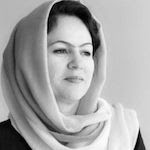
Fawzia Koofi / Afghanistan
Afghan politician and author. Outspoken advocate for the rights of women, children and democracy. Head of the Parliament’s Women Affairs Commission and former candidate for the President of Afghanistan.
Friday, October 25, 12PM–2PM
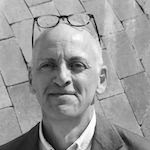
Jonathan Ledgard / United Kingdom
Creator of the concept of cargo drones and droneports in Africa. His novel Submergence was named Book of the Year by the New York Times. He explores the relationship between artificial intelligence and nature.
Monday, October 28, 2:30PM - 4PM

Karolína Koubová / Czech Republic
Trainer of aerial silks and aerial acrobatics, former curator of Jihlava’s DIOD theatre. Leader of the local political organisation Fórum Jihlava and since 2018 the mayor of the city.
Friday, October 25, 2:30PM - 4PM
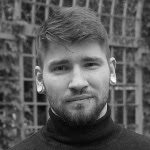
Christian Weissgerber / Germany
A leading figure of the German militant Neo-Nazi scene until 2010, when he dropped out and deradicalized. Since then he is working in the line of prevention and elucidation of racist and nationalistic politics at schools and universities.
Monday, October 28, 2:30PM - 4PM

Sophie Howe / Wales
The Future Generations Commissioner for Wales. Her role is to act as a guardian of interests of future generations in Wales and general public well-being. The world’s first future generations’ representative with statutory powers.
Saturday, October 26, 12PM - 2PM
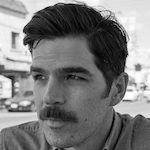
Francisco Cantú / USA
Former US border patrol agent, essayist and author of the book The Line Becomes a River in which he reflects on his experience of patrolling the US-Mexican border. Recipient of the 2019 Los Angeles Times Book Prize.
Monday, October 28, 4:30PM - 6PM

Isabella Salton / Brazil
Executive director of Instituto Terra, a community non-profit environmental NGO, which has been over 20 years restoring the vast and devastated areas of the Atlantic Forest and its ecosystem.
Sunday, October 27, 4:30PM - 6PM
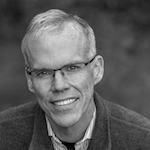
Bill McKibben / USA
American author and environmentalist. Founder of 350.org, the first planetwide, grassroots climate change movement, which has organized more than 20,000 rallies around the world.
Sunday, October 27, 12PM - 2PM
You can look forward to over 30 lectures, discussions and presentations, which will take place at Jihlava's Horácké Theatre on October 24–29. Each of the six days of the Inspiration Forum will be dedicated to one topic and their titles are the following: God & Co. / Woman in Change / Re:democracy / Climategeddon / How Not To Be Afraid? / Made in China.
Read the full programme and profiles of the Inspiration Forum guests here. The Inspiration Forum is accessible to holders of any type of accreditation for the 23rd Ji.hlava IDFF.
Applications are now welcome for the 14th FIPRESCI Warsaw Critics Project – a training programme for young critics and film journalists from Central and Eastern Europe coordinated by the Warsaw Film Foundation in a partnership with International Federation of Film Critics. The Workshop will be held during the 35th Warsaw Film Festival between 11 and 20 October 2019. A group of young critics will be invited to the festival and have a unique opportunity to take part in one of the most prestigious film events in the region and meeting high-profile film professionals. Under the guidance of tutors, participants will be covering the festival and industry events, delivering film reviews and conducting interviews with directors and filmmakers. They will be encouraged to use their own initiative and will receive constructive, positive feedback about their work.
Warsaw Critics Project is devised and coordinated by British film journalist Amber Wilkinson and Italian critic Tommaso Tocci.
Amber Wilkinson is a journalist with more than 20 years experience. She is the co-founder and editorial director of UK-based website Eye For Film. Her byline has appeared in The Times, Daily Telegraph, Sydney Morning Herald and Filmmaker Magazine among others. She also contributes as a freelance film critic on BBC Radio Scotland. She has run several FIPRESCI young critics' workshops and mentored student critics at the Edinburgh International Film Festival in 2018 and 2019.
Tommaso Tocci has so far contributed to various publications on cinema, including Indiewire, RogerEbert.com, CinemaScope, Filmkrant and Ioncinema.
Workshops are designed for critics under the age of 30 with proficient skills in written and spoken English. All participants are granted with shared travel and accommodation grants.
Selected works of the participants will be published on FIPRESCI, Ioncinema and Film New Europe websites.
Previous participants have gone on to contribute to major international film publications like Screen International, Indiewire, The Hollywood Reporter, Cineuropa and Film New Europe.
Please send your application including CV, self-introduction, and three samples of your published work in English, to This email address is being protected from spambots. You need JavaScript enabled to view it.
Deadline: 30 September 2019.
JIHLAVA: The 23rd Ji.hlava IDFF, running 24-29 October 2019, has announced the complete line-up of competition films, with nine full-length documentaries competing in the Opus Bonum main competition.
JIHLAVA: Romanian director Cristi Puiu takes up the mantel of the sole juror for the international documentary competition Opus Bonum at the 23rd edition of the Ji.hlava IDFF, which runs 24-29 October 2019.

PRODUCTION: Ambitious 10 Million Dollar Project The Meaning and Mystery of Life in Postproduction
Czech Republic 08-10-2019PRAGUE: Czech director/writer/producer Petr Vachler is in postproduction with The Meaning and Mystery of Life, an ambitious project mixing narrative fiction, documentary and animation, and exploring the fundamental questions of humanity.
JIHLAVA: Online audiences will once again select the Best Short Film of the Ji.hlava IDFF, whose 23rd edition takes place 24-29 October 2019.
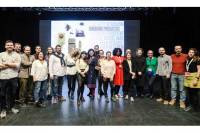
JIHLAVA: The 23rd Ji.hlava IDFF (24-29 October 2019) has announced the 18 selected 2020 Emerging Producers, with half of the group coming from CEE territories. The event is the only one of its kind devoted to European producers of documentary films.
The Riga International Film Festival will feature national premieres of internationally acclaimed Latvian films
Festivals 04-10-2019The Riga International Film Festival, which will be held from October 17 to 27, will feature the national premieres of several Latvian films that have already received acclaim at other international film festivals, including "Immortal", which received the Grand Prix at Karlovy Vary, and Laila Pakalniņa's black and white film "Spoon". Kārlis Lesiņš' drama on depression – “The Despair”, with Kaspars Zāle in the lead role – will also be shown on the big screen for the first time, as will the Latvian-German co-production “The Birth of the Leopard”, a documentary about a legendary love story linking the Latvian town of Stāmeriene with Sicily.
National film premieres at RIGA IFF provide the opportunity for a growing number of respected film professionals from around the world to see the latest Latvian films and their premieres on the big screen right here in Riga. A premiere of a Latvian film is always a special event for the festival as it creates a wonderful opportunity to acknowledge national cinema and participate in celebrating the achievement. Sometimes a film makes its national premiere after it has already been screened for competitions at prominent foreign film festivals, which is the case this year with “Away” and “Spoon”; at other times, it is local audiences who will first see the film on the big screen, as it is this year with Kārlis Lesiņš’ “The Despair” and Emīls Alps’ “Choir. Conductor. Kamēr…”. RIGA IFF also invites audience to celebrate Latvian cinema.
On October 19, the film “The Despair” – award-winning director Kārlis Lesiņš’ feature-length debut featuring Kaspars Zāle, Alise Danovska, Līga Zeļģe and Vita Vārpiņa – will see its premier. The film is about Gatis, a freelancer who is struggling with depression and the modern-day affliction of burnout. He goes to his childhood home to rest, recover and clear out his mind, but accidentally ends up in a strange, cult-like therapy group that appears to aid the healing process, yet also uncovers the dark corners of Gatis’ subconsciousness as he comes to face childhood traumas and ghosts from the past. Going back home becomes a tough psychological struggle with both one’s self and one’s past. Kārlis Lesiņš, the film’s director and screenwriter, admits that this is a very personal and painful subject for him. ‘Yes, I have gone through something similar myself. I wanted to tell others about it because I know that I am not the only one – many will identify with the subject,’ reveals the director, who is a veteran recipient of two ‘Lielais Kristaps’ National Film Awards.
A significant page of European history directly related to Latvia will be opened by the Latvian-German co-production “The Birth of the Leopard”, which will be coming to Riga immediately after its world premiere at the Hamburg Film Festival. The protagonist of the film is Giuseppe Tomasi di Lampedusa, known worldwide for authoring the Italian best-selling novel The Leopard. (The 1963 screen version directed by Luchino Visconti and starring Claudia Cardinale and Alain Delon received the Grand Prix at Cannes and is considered a masterpiece.) Legend has it that Tomasi wrote part of the novel in Latvia while visiting his Baltic-German wife, Alexandra von Wolff-Stomersee, at Stāmeriena Castle. The film is laid out as the recounting of relationships; it is about an unusual love, about friendship through years of hardship, banishment and loss, and about the determination to not lose oneself during times of great change and to constantly rediscover oneself. The film’s score is by Kārlis Auzāns and features actresses Karīna Tatarinova and Sarmīte Vucāne. With costume design by Berta Vilipsone, the film was produced by Gints Grūbe and Elīna Gediņa-Ducena.
At RIGA IFF audiences will be able to finally see “Immortal”, the Estonian-Latvian documentary film that received the Grand Prix at Karlovy Vary. The film allows viewers to see a different angle of how a Russian citizen is ‘produced’. The film’s director, Ksenia Okhapkina, went with a film crew to northern Russia to a former gulag where political prisoners and deportees were once imprisoned. The film uncovers the mechanism that encourages people to voluntarily deny their personal individuality and become a serviceable resource of the state. The ultimate goal of these people is to give their lives to the ‘Motherland’, thereby achieving immortality. ‘This is a film about people who have been brought up by propaganda,’ says Okhapkina. ‘Having made this film, I have a better understanding of what is happening in Russia – why people support a government and political system that work against them and their children.’ The screenplay was co-authored by Pauls Bankovskis, who spent a lot of time in conversation with the film’s director.
The second film to have made its world premiere at the Karlovy Vary International Film Festival but its Latvian premier as part of the RIGA IFF Feature Film Competition programme is Laila Pakalniņa's documentary “Spoon”. The film follows the lengthy life-cycle of a simple plastic spoon – from black crude oil to a white spoon, the life purpose of which is exactly one meal. The film was made in black and white because as the director says: crude oil is black and the spoon is white. This currently very relevant ecological theme of illustrating the absurdity of modern consumer society – produce, use, throw away – has been packaged in artistic high-quality form by cameraman Gints Bērziņš, a co-author of nearly twenty of Pakalniņa’s films. Unlike many of Pakalniņa's films which are usually shot only in Latvia, the geographical scope behind “Spoon” is very broad – material for the film was also sourced from Lithuania, Norway, China, Hong Kong and Azerbaijan; the film is a co-production of Latvia, Lithuania and Norway.
Emīls Alps’ documentary “Choir. Conductor. Kamēr…” tells the story of the famous youth choir's journey journey to the Tolosa Choral Competition, at which the grand prize must be won to qualify for the European Grand Prix for Choral Singing. The film’s director had the opportunity to capture moments that are usually hidden from outsiders. Created by a choir member, the film offers unprecedented insight into the singers' passion for music and the overcoming of difficulties.
Several short films by Latvian filmmakers will see their national premieres as part of the RIGA IFF programme SHORT RIGA.
Over eleven days, the Riga International Film Festival, which will take place from October 17 to 27, will screen 148 films within eleven thematic programmes and competitions. The full festival schedule and tickets to all screenings can be obtained at the festival’s website: rigaiff.lv.
RIGA IFF is supported by the Culture Capital Foundation of Latvia, the National Film Centre, Live Riga, and the Riga City Council.