Network Meeting Between the Odessa International Film Festival and the FilmFestival Cottbus in Ukraine
Festivals 28-07-2017At the 8th Odessa International Film Festival, a panel discussed how film festivals can invigorate civil society dialogue in Eastern Europe. The discussion was part of a network meeting that has been jointly organised with the FilmFestival Cottbus. The event is supported by the Foreign Office of the Federal Republic of Germany.
In Eastern Europe, also, the medium of film reflects on social and historical taboo issues, thereby promoting civil society dialogue. However, this can on occasion lead to political pressure being inflicted on film makers, but also on film festivals, which perceive themselves as forums for social dialogue. Representatives of renowned Eastern European film festivals now meet to evaluate the situation: what can film festivals contribute to civil society dialogue? What are the problems arising from this? To what extent do economic and political framework conditions impact on festival programme planning?
Participants of the panel discussion at the 19th July were Virgiliu Margineanu, director of OWH Studios, which organises the "Cronograf" documentary film festival in the Moldovan capital of Chisinau, Anna Chkonia, programme coordinator of the Tbilisi International Film Festival, Igor Soukmanov, programme director of the Listopad film festival in Minsk, Samaya Asgarova, head of the department of international relations at Azerbaijan Film, Julia Sinkyevich, director of the Odessa International Film Festival, and Bernd Buder, programme director of FilmFestival Cottbus.
Chkonia and Sinkyevich were able to report that the number of films produced in Georgia and Ukraine will increase as a result of targeted film funding next year. New funding mechanisms are aimed primarily at new talents, which should also provide for an extension of the content by which filmmakers reflect society, history and politics in their countries. Soukmanov reported on the strengthening of the independent film scene in Belarus. Beyond the production of state films, independent films bring a variety of artistic approaches and content to the screen, with which the national identity is reflected in a poignant, critical and diverse way. Thus, Buder summed up, national identity in both countries will be defined as a samle of dicerse approaches. The FilmFestival Cottbus will devote a special to the Belarussian cinema in its next edition.
In Azerbaijan, only a few feature films have emerged in the previous years which, however, managed to foster civic discourse. The feature film INNER CITY (2015) discusses the advantages and disadvantages of the rapid urbanization of the capital city of Baku, and POMEGRANATE GARDEN, which recently had its world premiere at the Karlovy Vary International Film Festival, throws a reflective light on the patriarchal structure pf the society. Asgarova reported an 80% reduction in the film budget, but was confident that it would be able to implement plans for an international film festival in Baku in 2018. In the small film industry in the Republic of Moldova, only a few films are produced, added Margineau. With the programme of his documentary film festival, he tries not only to raise the most diverse themes, but also to bring the medium film closer to children and young people.
In spite of the overall positive development, especially in the context of populist tendencies and warlike conflicts, there are also reports of several obstacles for film and film festivals. Measures such as the prohibition of distribution and broadcasting of Russian films in Ukraine, censorship attempts in several countries and the intended increase of the fee for the rental permit for foreign films in Russia are to restrict the intendend dialogue between people and cultures and thus the civil society discourse between different standpoints. In this context, the Odessa Film Festival once again appealed for the release of the Ukrainian director Oleg Sentsov, who was sentenced to twenty years' imprisonment by a Russian court a few years ago for spurious reasons.
The network meeting of festival partners from the countries of the Eastern Partnership will be continued at the 27th FilmFestival Cottbus. The event will also include films from the countries concerned that show how film discusses relevant social issues.
ODESSA: An Eastern Partnership aiming at discussing how film festivals can invigorate civil society dialogue in Eastern Europe was launched as a joint partnership between the 7th Odessa International Film Festival and the FilmFestival Cottbus. The network meeting of festival partners from the countries of the Eastern Partnership will be continued at the 27th FilmFestival Cottbus (7-12 November 2017).

FNE IDF DocBloc: Two Films from East Silver Caravan Competing for Heart of Sarajevo Award
Bosnia-Herzegovina 28-07-2017Two documentaries from the selection East Silver Caravan, Romania's Planeta Petrila, directed by Andrei Dascalescu, and Macedonia's Avec l´Amour, directed by Ilija Cvetkovski, will compete in the documentary section of Sarajevo Film Festival (11-18 August 2017).
Lithuanian Film Centre announced the second financing session in 2017 on 4 July 2017.

SARAJEVO: Ten projects were selected at CineLink Work in Progress sessions and will compete for three major awards. The announcement has been made on 26 July 2017. CineLink takes place within the Sarajevo Film Festival (11-18 August 2017).

TALLINN: Klaus Härö’s Finnish / Estonian coproduction The Fencer is currently in the U.S. distribution and will be screened in 16 cinemas across the country until 1 September 2017.

WARSAW: Film agents from Poland, Estonia, Georgia and Serbia are among the seven agents selected for the 5th edition of SOFA (School of Film Agents). The first part of the workshop will be held in Warsaw from 27 August to 1 September 2017, while the second one will take place in Tbilisi from 22 to 28 April 2018.
Czech State Cinematography Fund announced production grants for eleven documentaries with major Czech participation on 25 July 2017.

STRASBOURG: German / Bulgarian / Austrian coproduction Western, directed by Valeska Grisebach, is among the three finalists at the 11th LUX FILM PRIZE. The winner will be announced at the formal sitting of the European Parliament in Strasbourg on 15 November 2017.
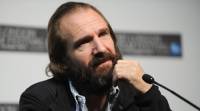
ZAGREB: The White Crow,a film focusing on the Russian ballet dancer and choreographer Rudolf Nureyev, will start shooting in Croatia in September. Ralph Fiennes will direct.